Sarangbang Kalguksu (사랑방칼국수) had been on my Chungmuro list for a while, mostly because it’s one of those old-school restaurants people mention when they talk about Korean boiled chicken and kalguksu in Seoul.
I finally went during boknal, which is Korea’s traditional summer period for eating stamina foods. It usually means chicken dishes: samgyetang, baeksuk, that kind of thing. Basically, when the weather gets brutally hot, Koreans somehow decide the answer is hot chicken.
I had wanted to try this place anyway, so boknal was a good excuse.
The Wait on Boknal
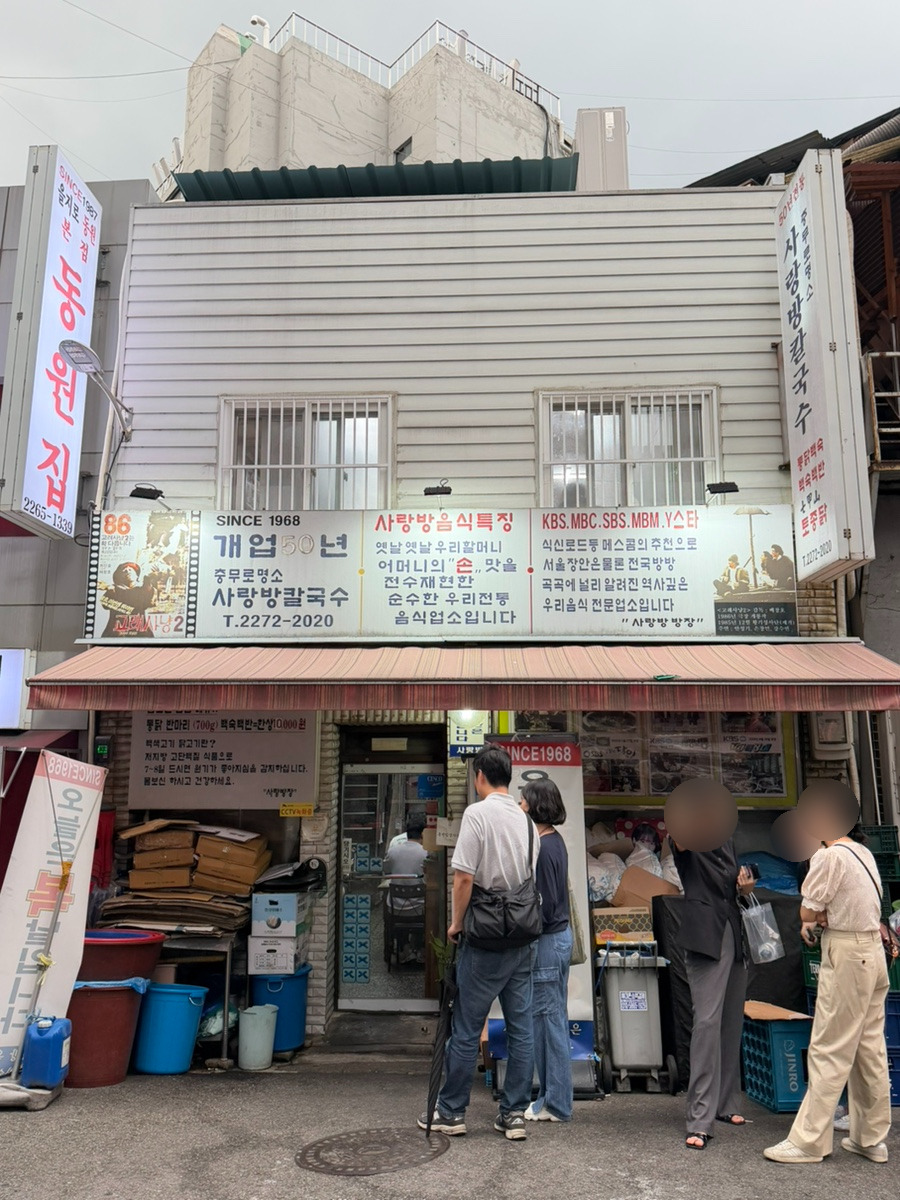
I visited on a weekday evening, and because it was around boknal season, there was already a line outside. Not exactly surprising, but still good to know before going.
This isn’t one of those places where you can put your name in remotely and wander around until your turn comes up. You wait in front of the restaurant.
Luckily, the line moved faster than I expected. I waited about 10 minutes before going in, which felt completely reasonable for a place like this, especially on a chicken-eating day.
An Old-School Chungmuro Spot
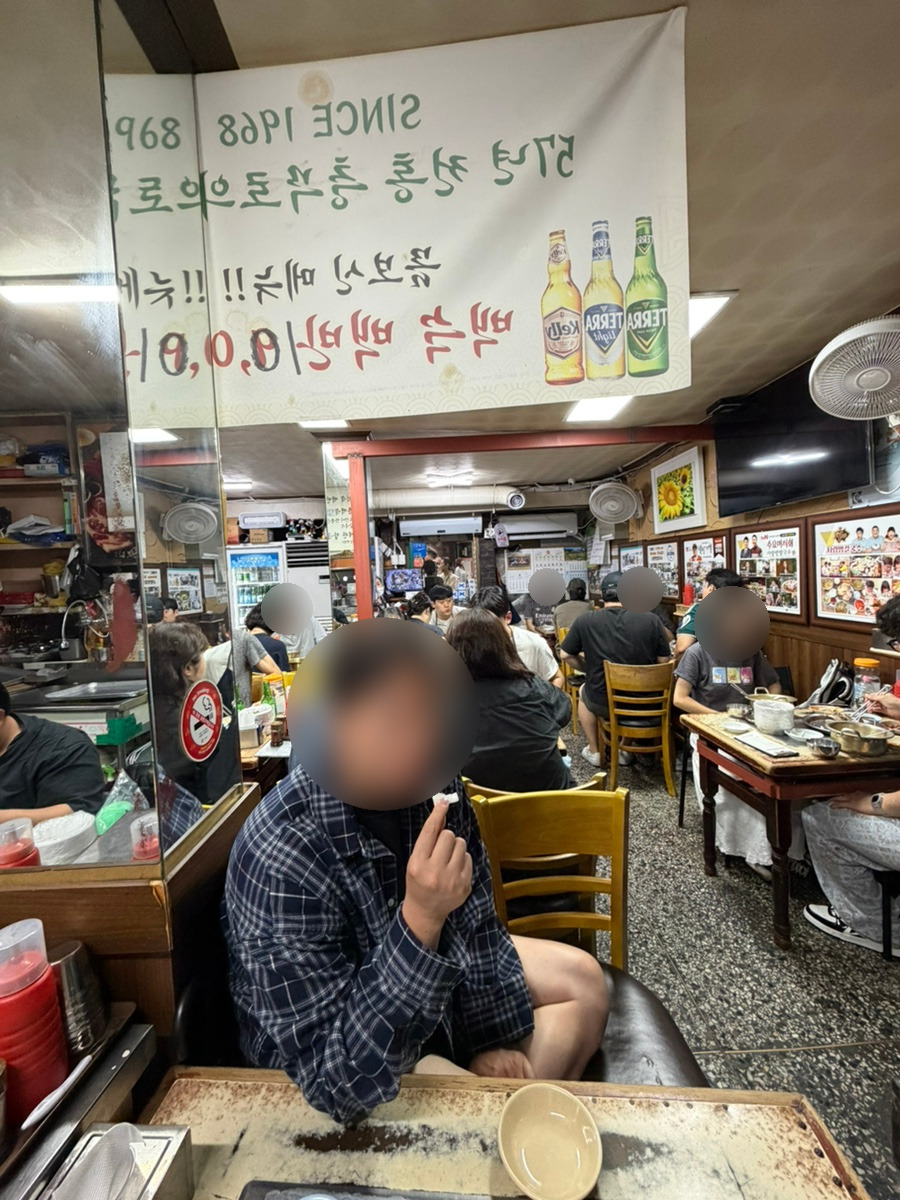
Sarangbang Kalguksu opened in 1968, and the inside has that old Seoul restaurant feeling without trying too hard to look retro.
There were seats upstairs too, but we were guided to the first floor. The space is simple, busy, and a little cramped in the way many older Korean restaurants are. For this kind of meal, that actually felt right.
If you’re looking for a quiet, polished restaurant, this isn’t that. If you want a place that feels like it has been feeding office workers and regulars forever, this makes sense.
What We Ordered
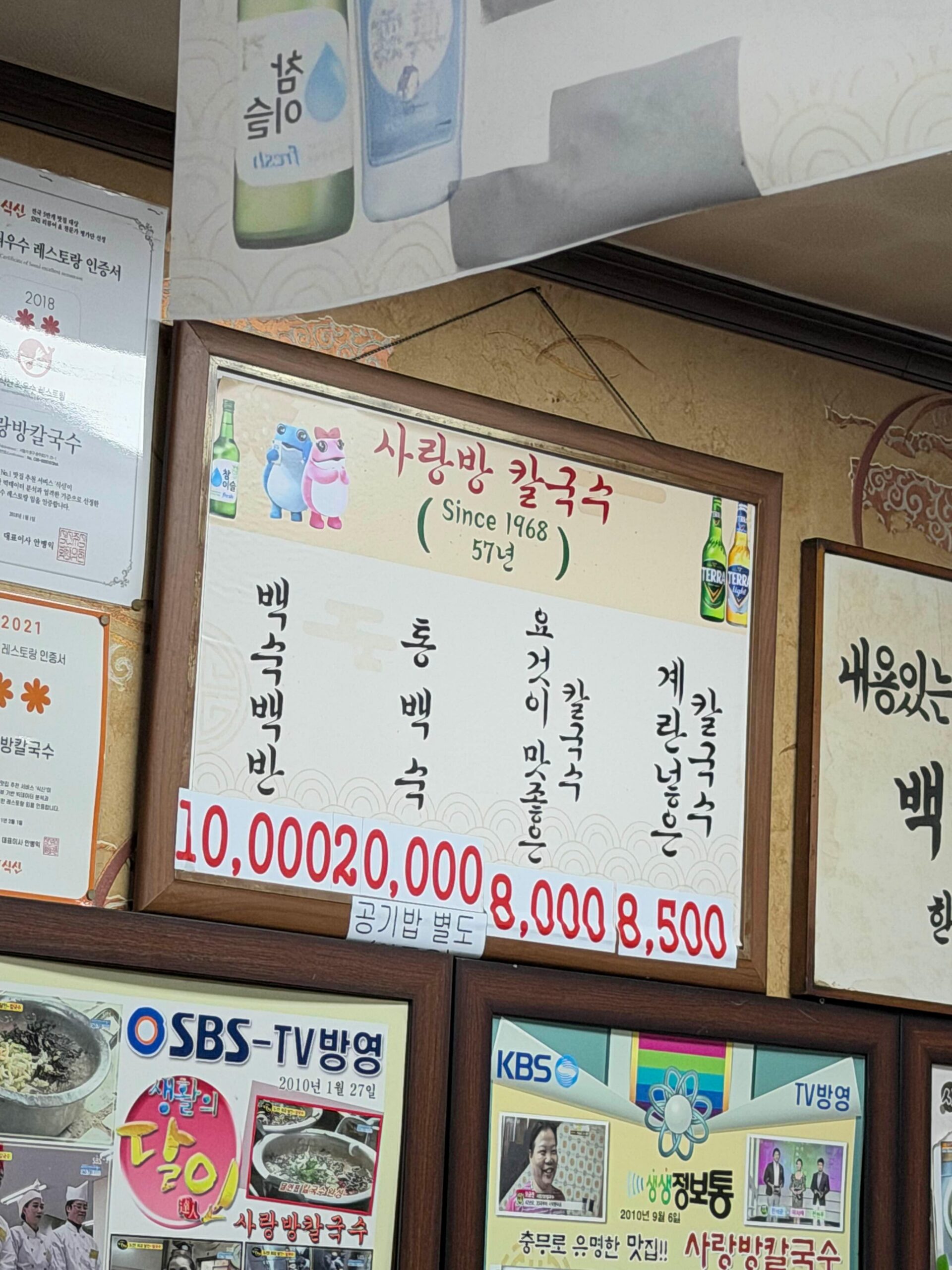
The menu is short, which is usually a good sign at places like this. We ordered two servings of baeksuk-baekban and one kalguksu.
Baeksuk is boiled chicken, usually cooked until the meat becomes soft and the broth turns clean and savory. Baekban means it comes as a rice set, so here it feels less like ordering a big shared chicken dish and more like a proper Korean meal with rice, broth, kimchi, and chicken.
It’s not samgyetang, and that difference matters. Samgyetang is usually served as a whole young chicken in ginseng-style soup, while this baeksuk-baekban felt plainer, more direct, and easier to keep eating.
Sauce First, Food Almost Immediately
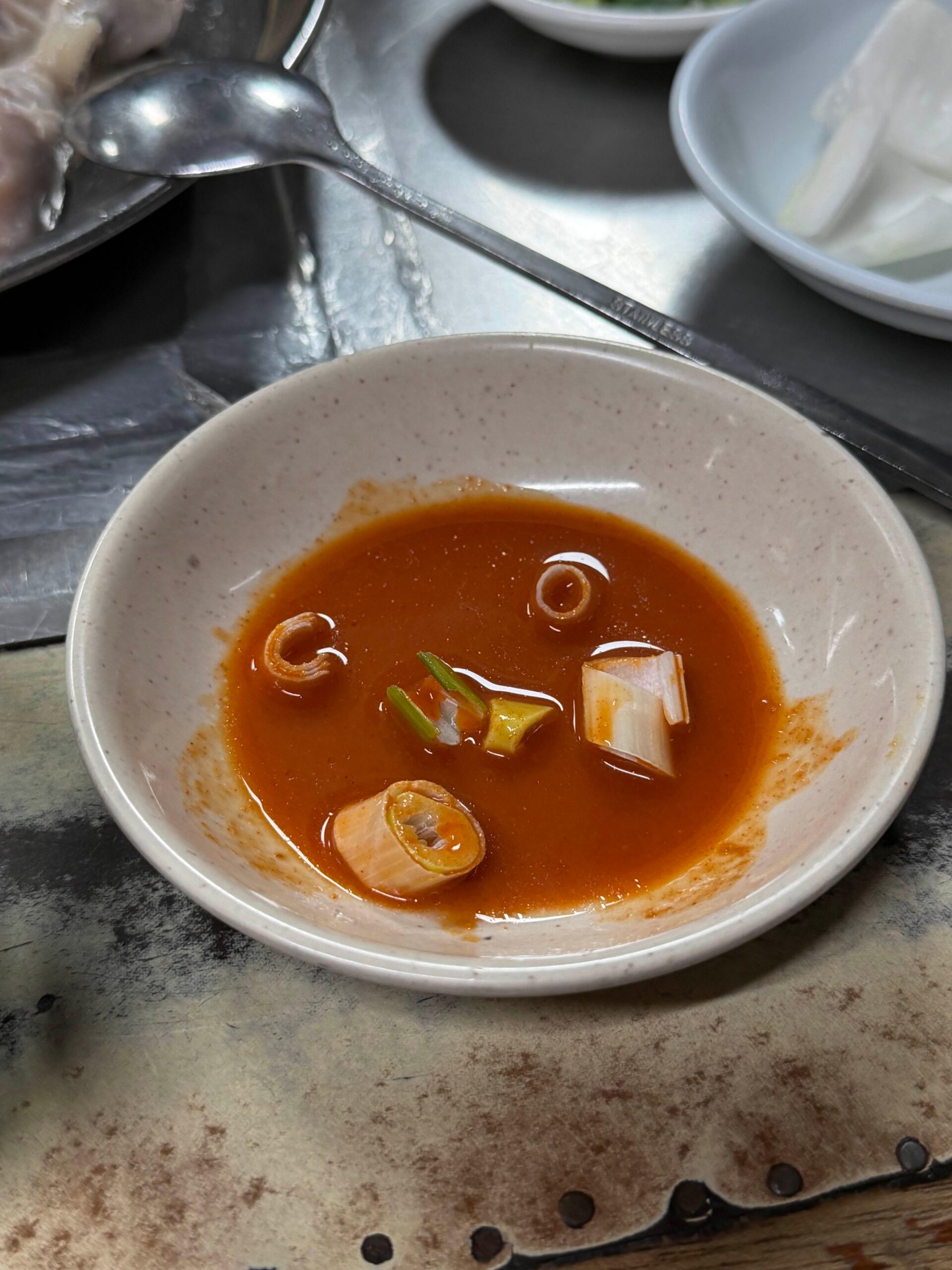
While waiting for the food, we mixed the house sauce with chopped scallions from the table.
This is the sauce you want ready before the chicken arrives. It’s sharp, savory, and just enough to wake up the mild chicken without covering it completely.
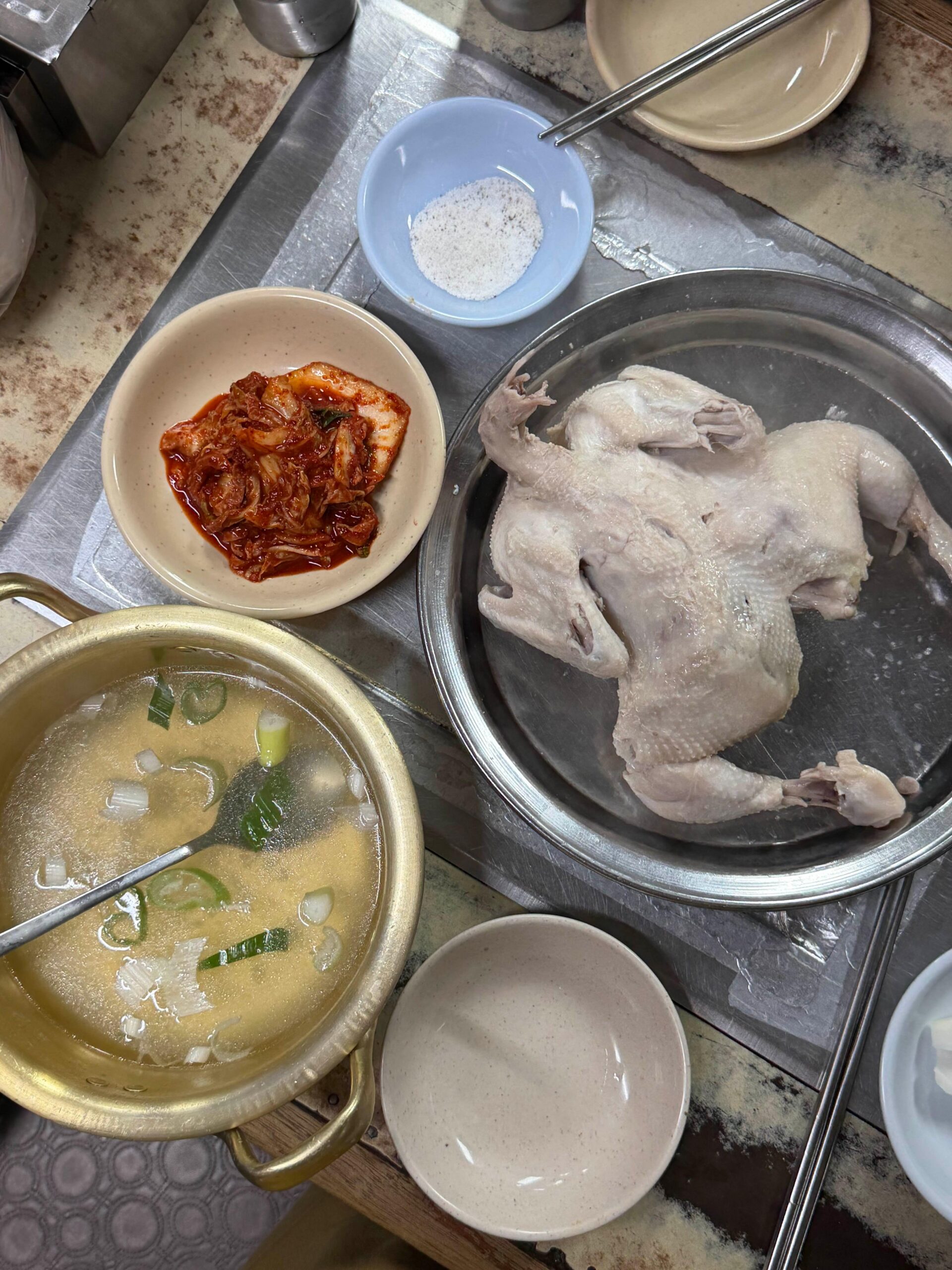
Except the food came out before I even finished getting the sauce ready.
No complaint there. The table filled up fast with chicken, broth, rice, kimchi, and the kalguksu we ordered on the side. It looked like a lot at first, but the flavors were clean enough that the meal didn’t feel heavy.
The Baeksuk-Baekban
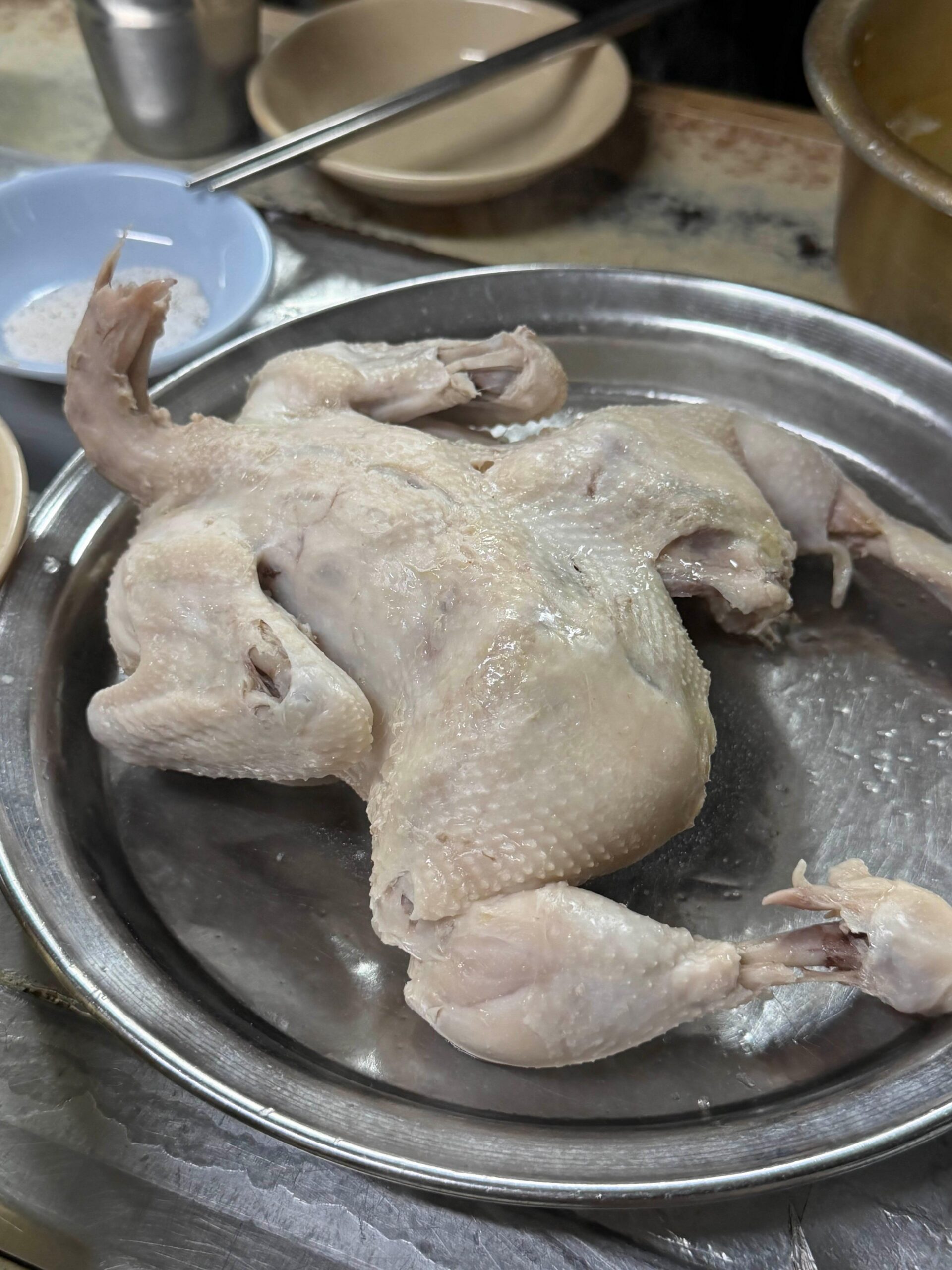
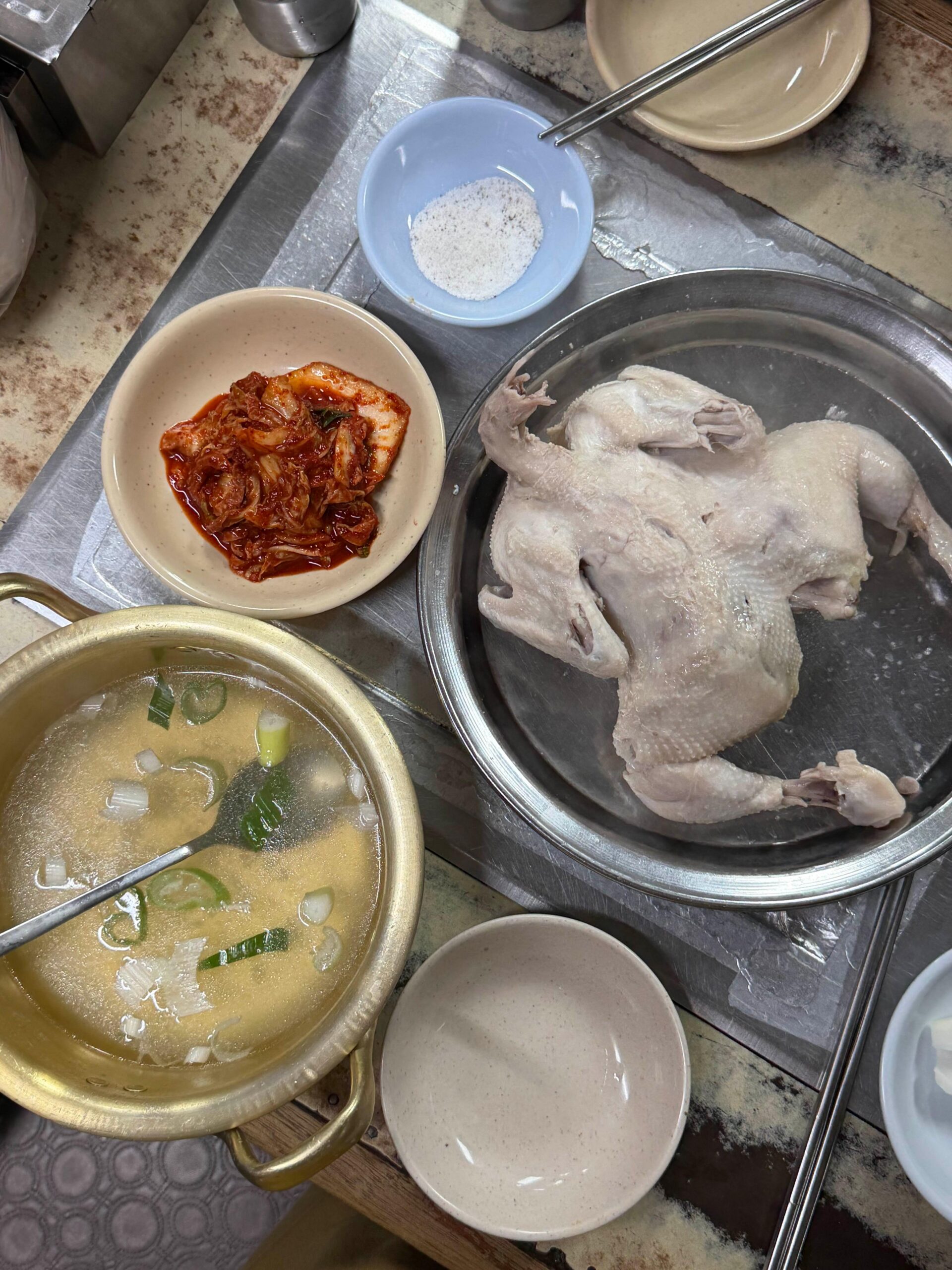
For the baeksuk-baekban, one serving comes with half a chicken. Since we ordered two servings, we got a whole chicken.
The chicken itself wasn’t especially huge, but it looked like it had been simmered for a long time. The meat came apart easily, which is exactly what I want from baeksuk.
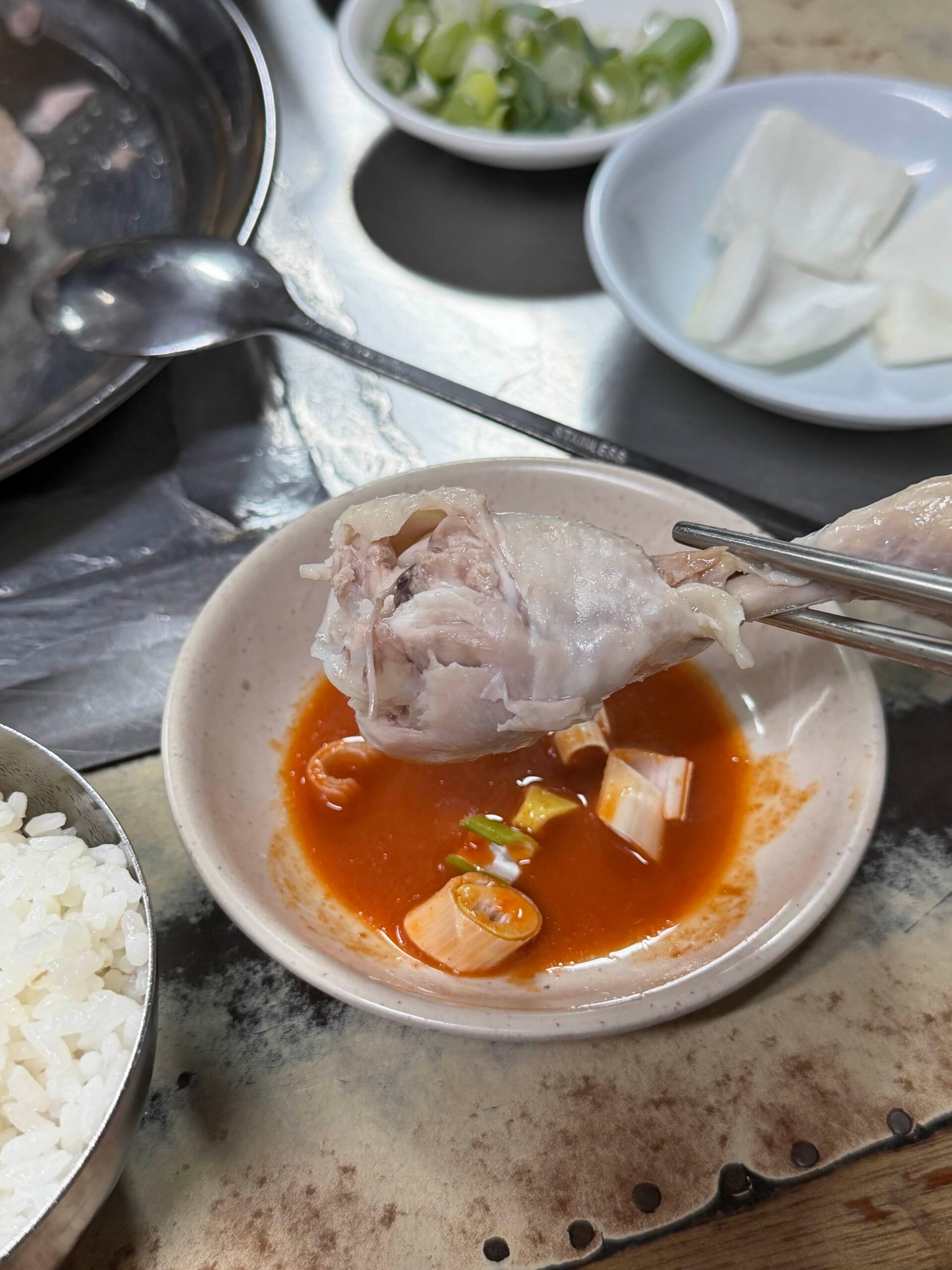
The best way to eat it was simple: take a piece of chicken, dip it into the scallion sauce, and eat it with rice.
I don’t usually get excited about baeksuk. I like chicken, but plain boiled chicken can feel a little too mild for me. This one worked because the meat was tender and the sauce gave it enough flavor.
I started eating faster than I meant to, which says enough.
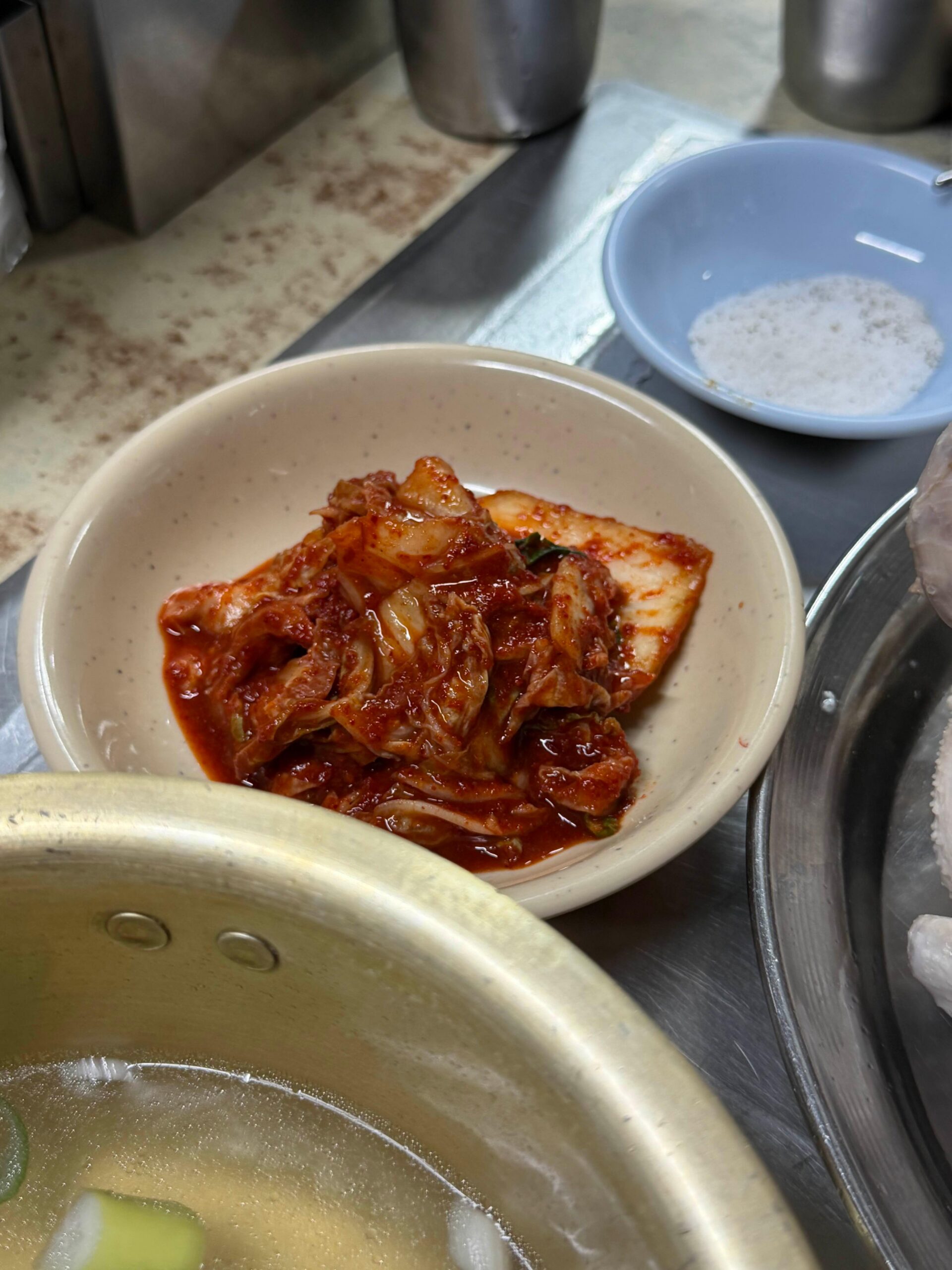
The only side dish was kimchi, but this is one of those meals where one good kimchi is better than five random side dishes.
It tasted fresh enough to cut through the chicken, but still had enough seasoning to go well with the kalguksu later. With a meal this simple, bad kimchi would be very obvious, and thankfully this one was good.
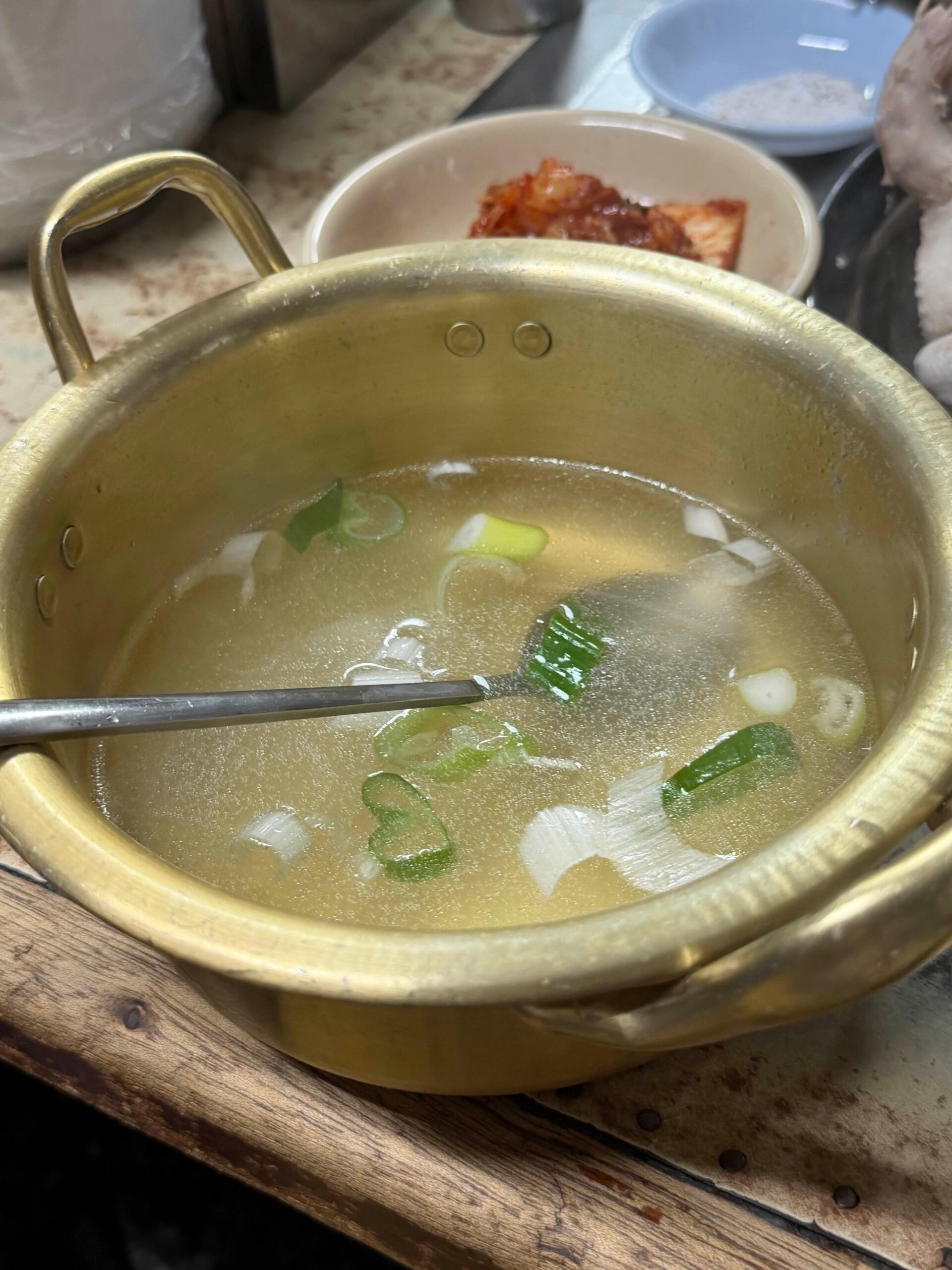
The chicken broth might have been my favorite part of the baeksuk-baekban.
It was clean, savory, and refreshing instead of oily or heavy. I kept going back to it between bites of chicken and rice, and by the end the bowl was almost empty.
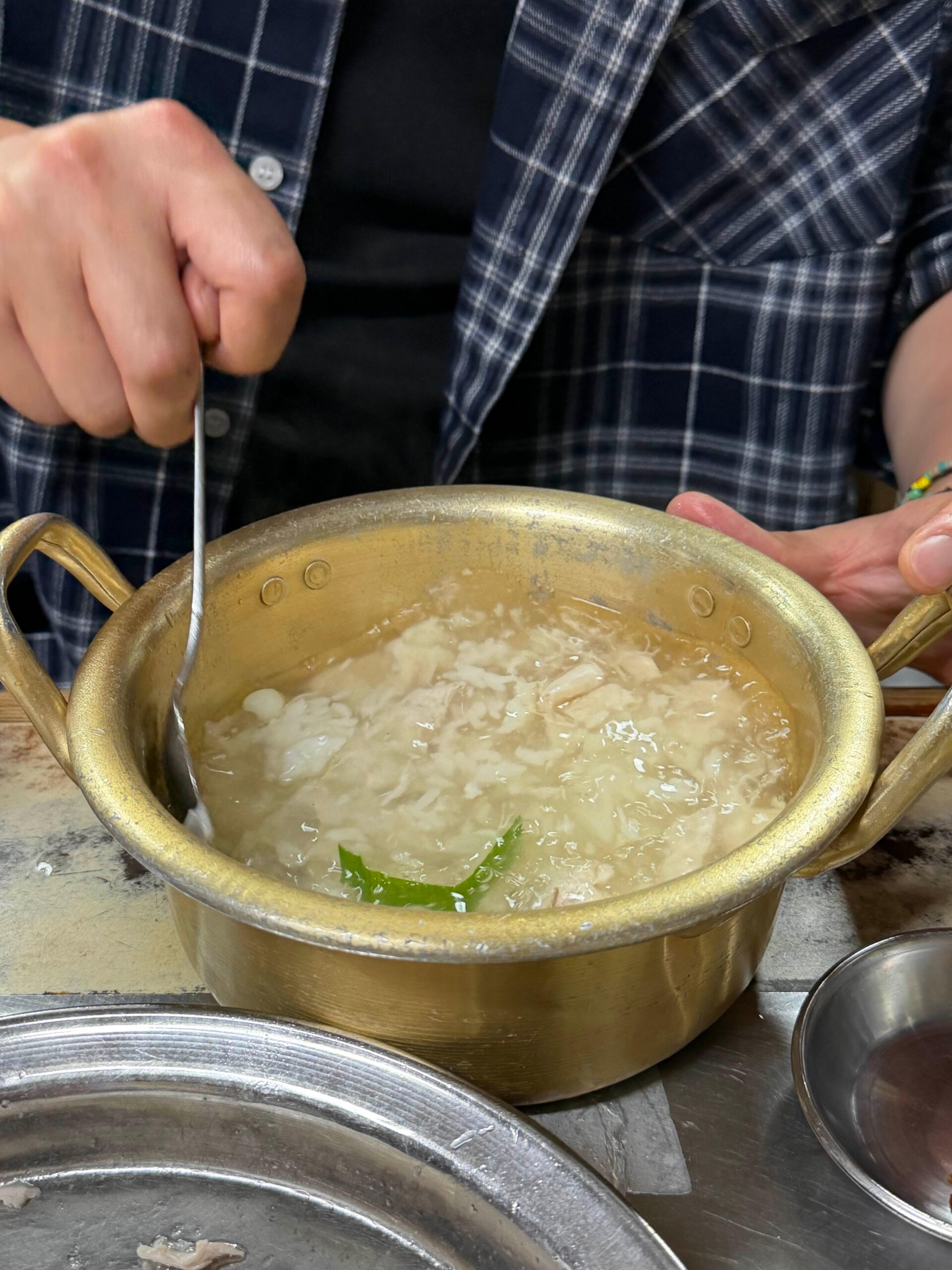
I ate the softer parts, like the leg and wing, with rice first. Then I put the drier breast meat into the broth with rice and added a small pinch of salt.
That made the breast meat much easier to eat. It also turned the broth into a simple chicken rice soup, which fit the whole boknal mood nicely.
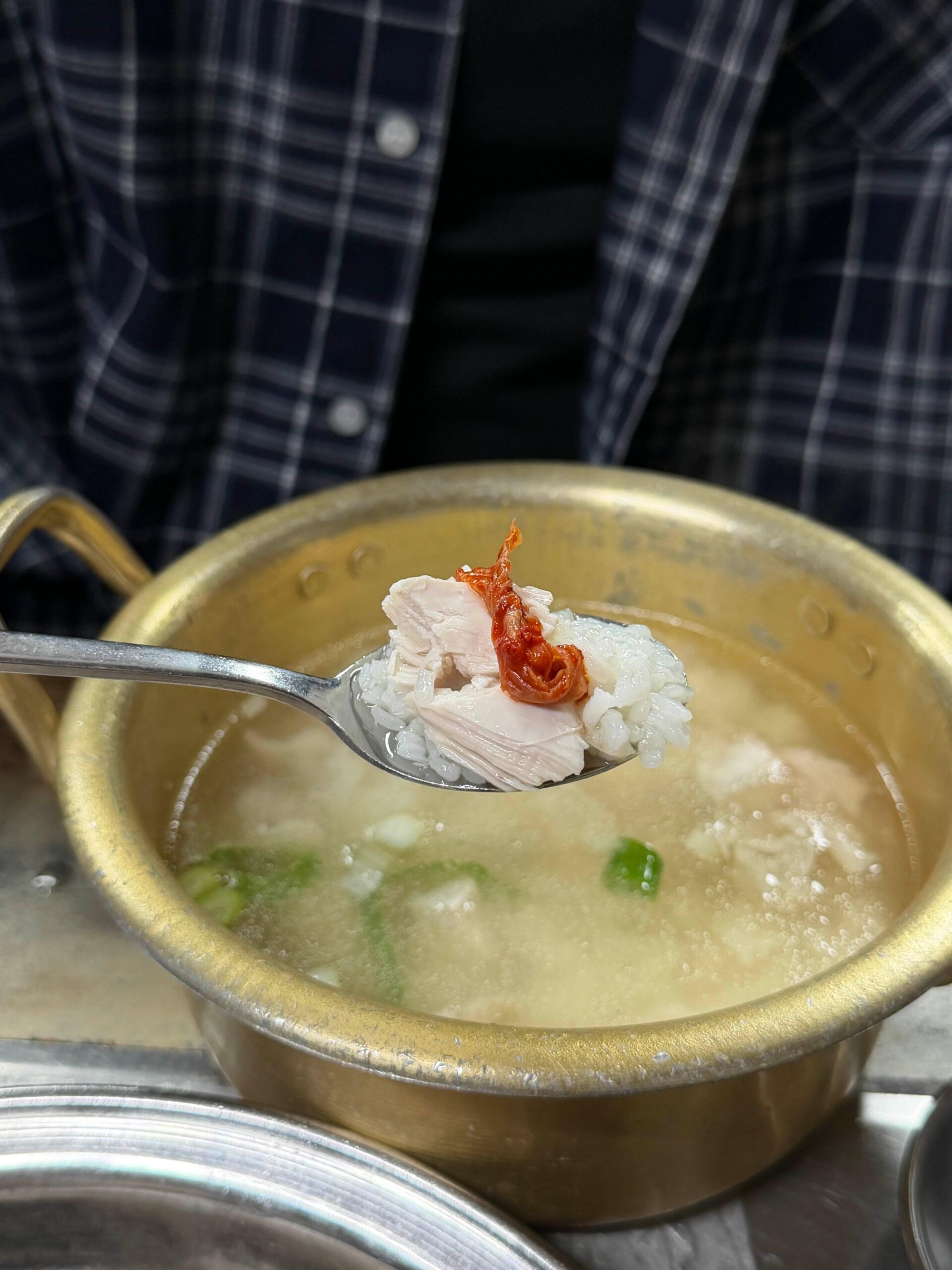
With kimchi on top, the rice and broth tasted even better.
The breast meat was softer than I expected, probably because the chicken had been simmered for so long. It still had that lean texture, but it didn’t feel dry in an annoying way.
By this point I understood why people come here for the baeksuk-baekban, not just the noodles.
Don’t Skip the Kalguksu
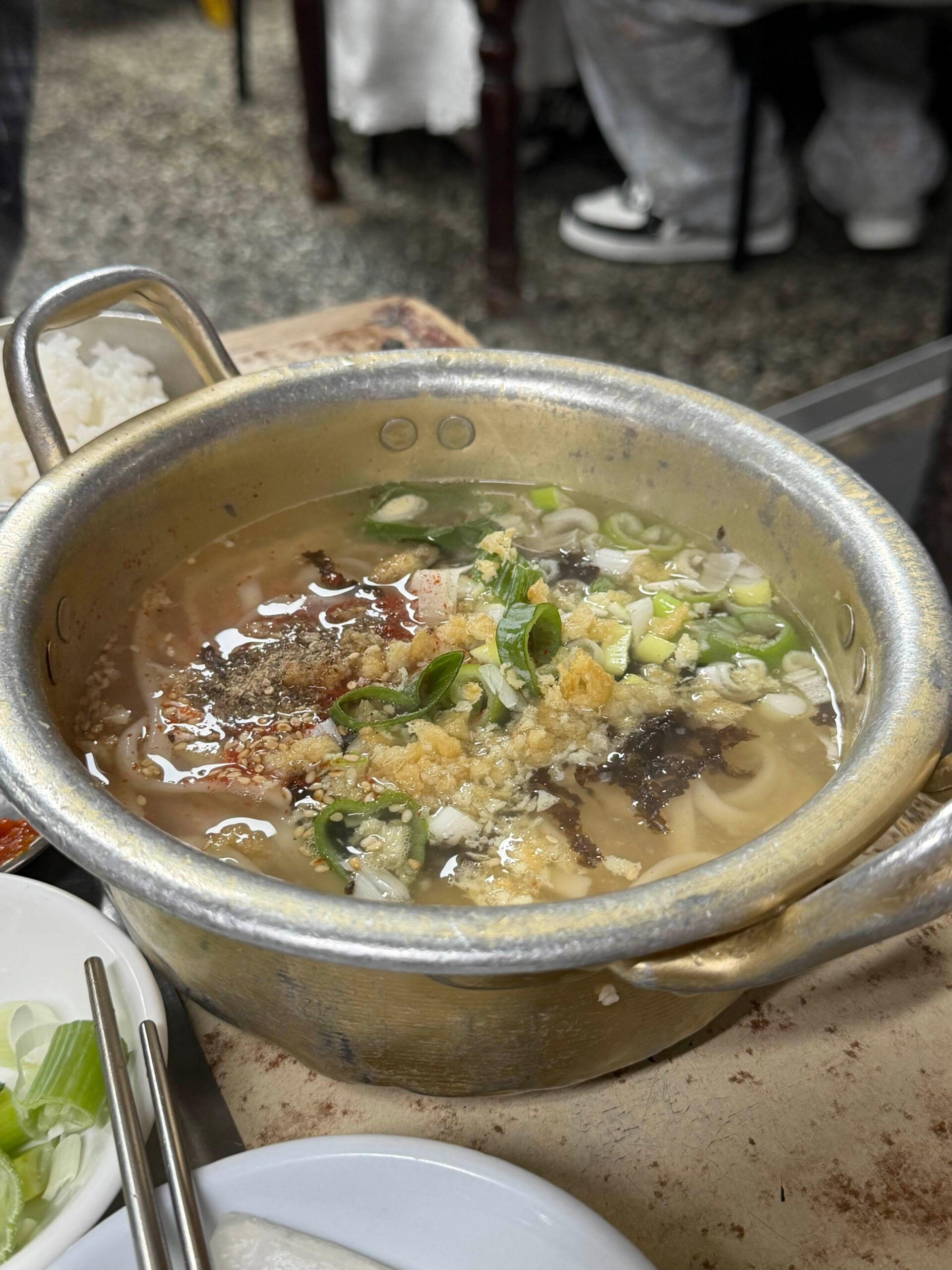
The rice set alone would have been enough, but I’d still order the kalguksu.
First, it came out in a classic aluminum pot, which already made me happy. Second, this isn’t chicken kalguksu. The broth is anchovy-based, so it has a different personality from the gentle chicken broth served with the baeksuk.
So even after the baeksuk, the kalguksu didn’t feel repetitive.
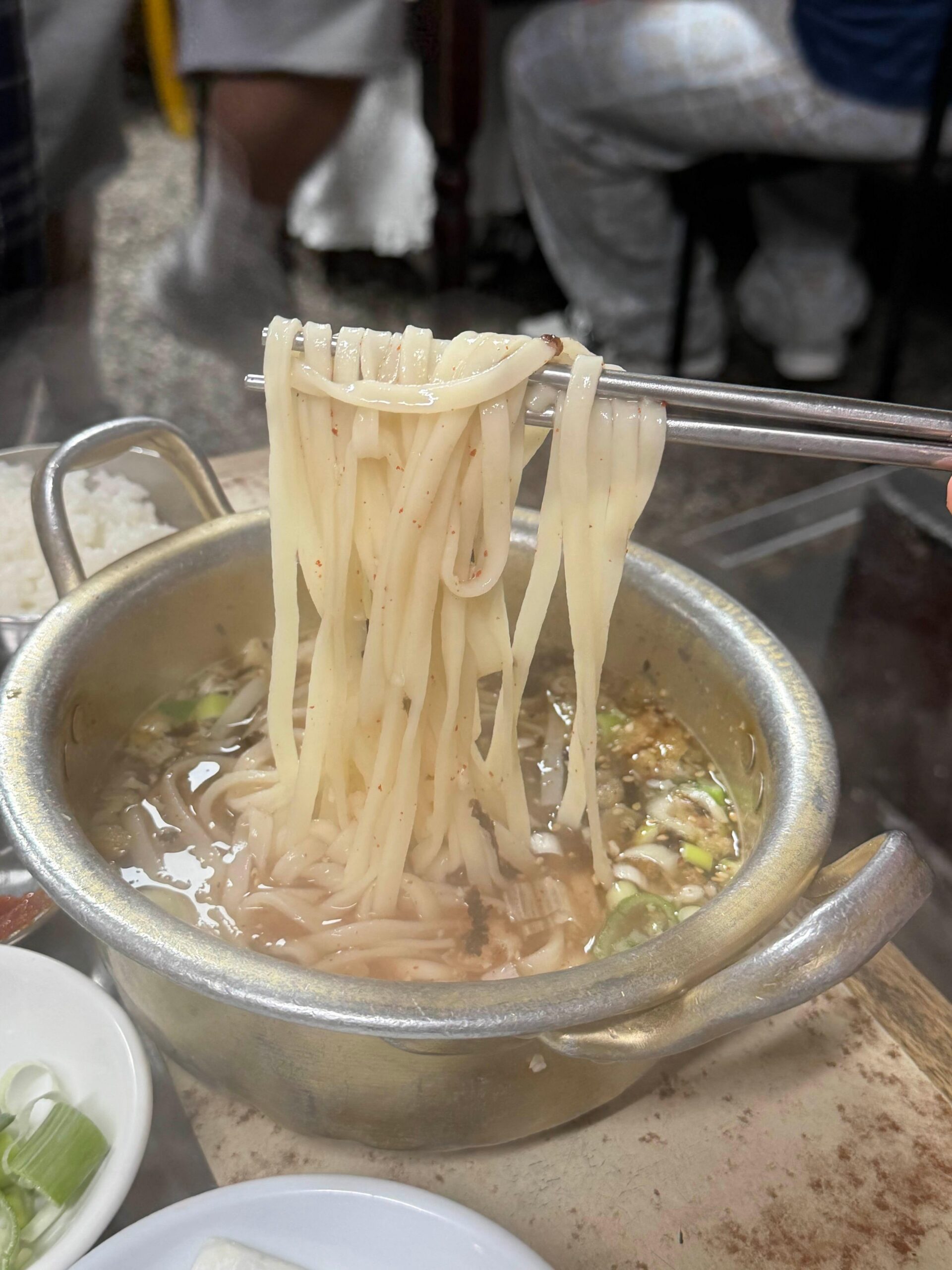
Compared with the clean chicken broth, the kalguksu tasted saltier and a little more peppery. Not spicy in a painful way, just pleasantly sharp.
The noodles were soft, and the broth had enough seasoning that it didn’t feel repetitive after the baeksuk. I was already full, but I kept eating anyway.
This was one of the most satisfying meals I’ve had recently near Chungmuro. It was just chicken, broth, kimchi, and noodles done well.
If you’re around Chungmuro and want an old-school Korean meal, I’d put Sarangbang Kalguksu on the list.
Where to Find It
Sarangbang Kalguksu (사랑방칼국수)
Area: Chungmuro, Seoul
Good for: baeksuk-baekban, chicken broth, kimchi, kalguksu, and an old-school Seoul meal.
Tip: On boknal or busy dinner hours, expect to wait outside. I went on a weekday evening and waited about 10 minutes.
Open Sarangbang Kalguksu in Google Maps →
Visited on a weekday evening during boknal season. Waiting and menu details can change.
Leave a Reply