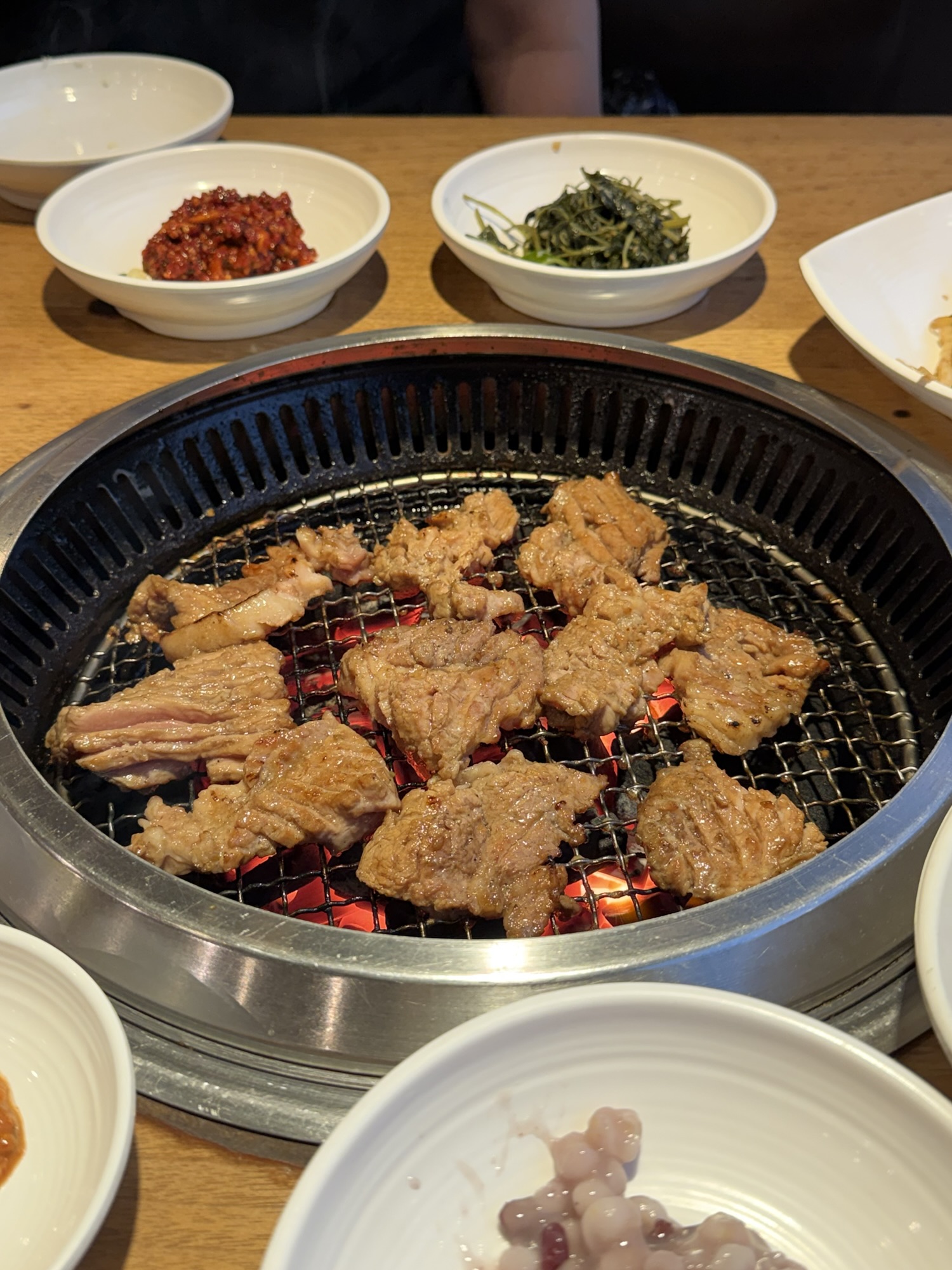
Songdo Galbi (송도갈비) in Incheon is one of those names that always comes up when Koreans talk about great galbi. It’s often called one of the country’s three great galbi restaurants, the kind of place with decades behind it. I’d been meaning to go for ages, and finally did: two servings of their pork galbi, plus the full spread that comes with it — banchan, doenjang jjigae, cold noodles, and a dessert at the end. Here’s the rundown.
If you haven’t had it before: galbi means ribs, though the pork version often comes off the bone — just marinated meat in a sweet soy-based sauce, grilled over fire right at your table. Beef galbi gets most of the international spotlight, but pork galbi — 돼지갈비 — is just as common here: cheaper, fattier, and honestly what a lot of us grew up eating. Songdo Galbi does the pork version with han-don (한돈), Korean-raised pork. That’s what I came for.
Getting there

Songdo isn’t far from Incheon Airport (인천국제공항) — about 30 to 40 minutes by car — so if you’ve got wheels, it’s an easy stop, even as a first or last meal on a Korea trip. And the parking is genuinely good: a big dedicated lot with valet, so no circling for a spot.
The entrance is something
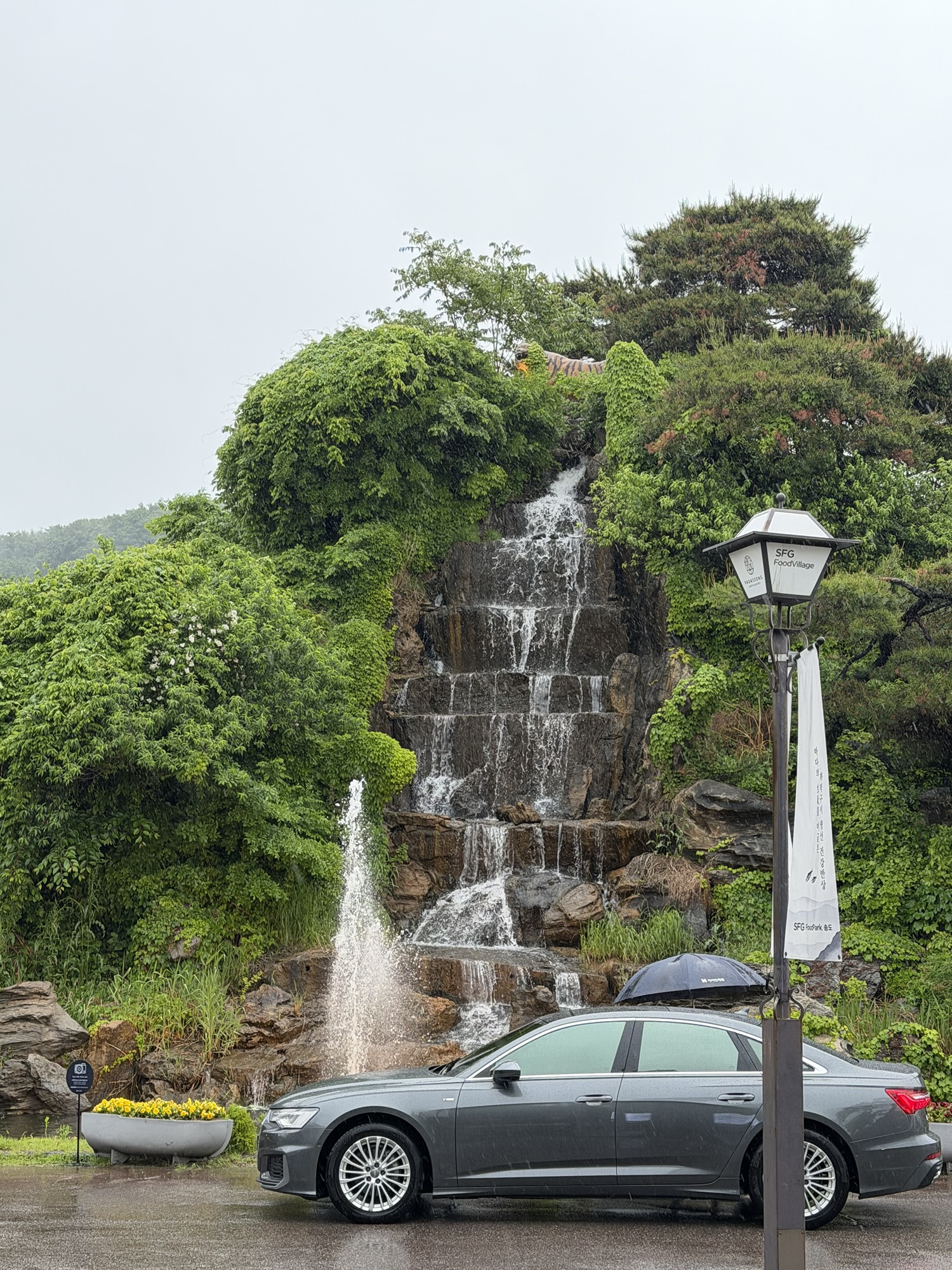
I wasn’t expecting a waterfall. There’s a full artificial rock-and-waterfall feature at the entrance, flanked by trees and flowering plants, with a vintage streetlamp and valet parking area in front. It’s the kind of entrance that tells you people come here for occasions. Business dinners, family celebrations, groups. The parking lot was full on a rainy weekday afternoon — that tells you something too.
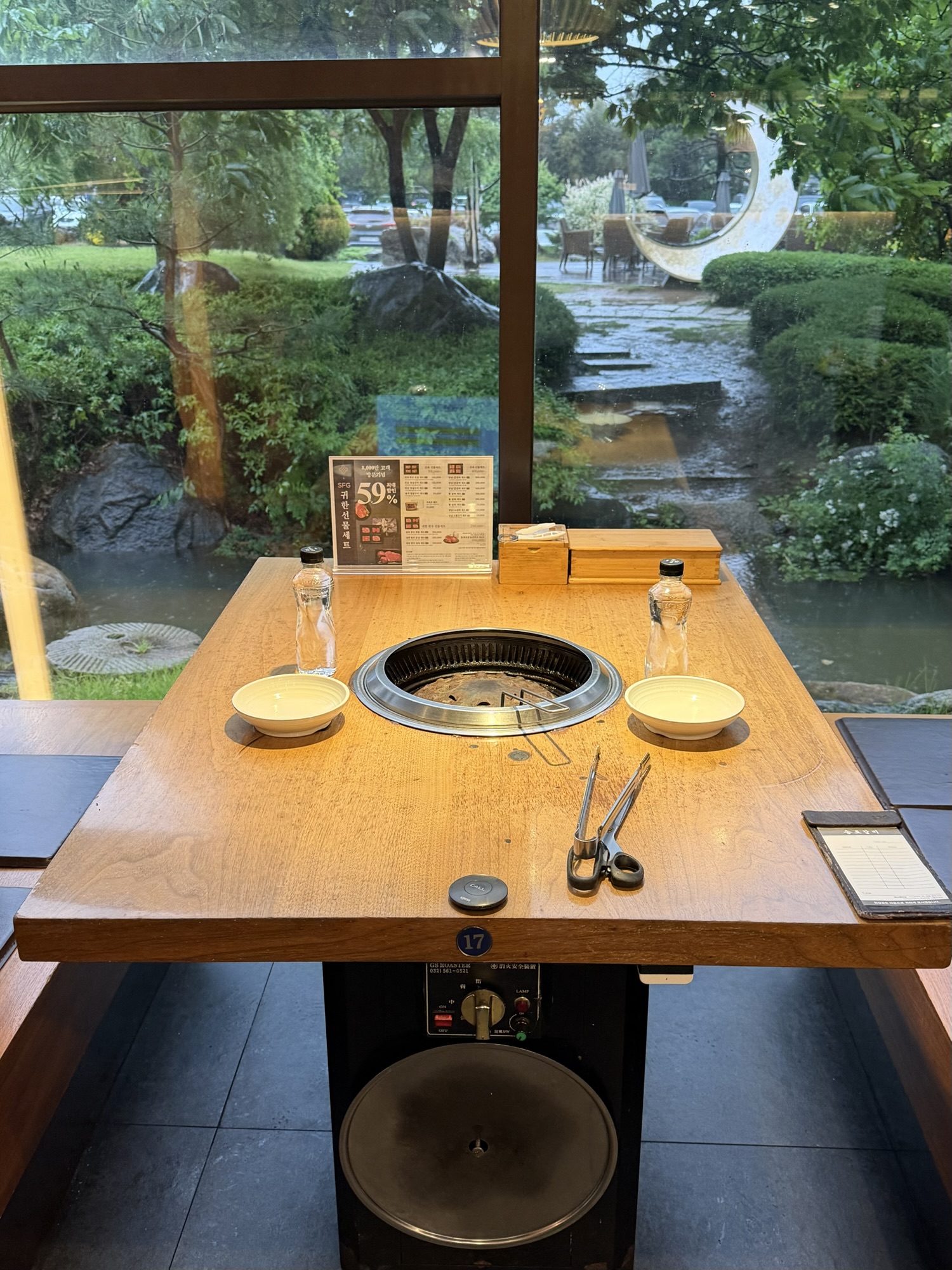
Inside, the dining room is large and surprisingly calm. Plenty of space between tables, which at a popular galbi place in Korea is not something you can take for granted. Some tables are set against floor-to-ceiling windows that look out onto a Korean garden with a small stream running through it. If you care about the view, ask when you check in — it’s not guaranteed but worth asking.
The banchan situation is different from most galbi places
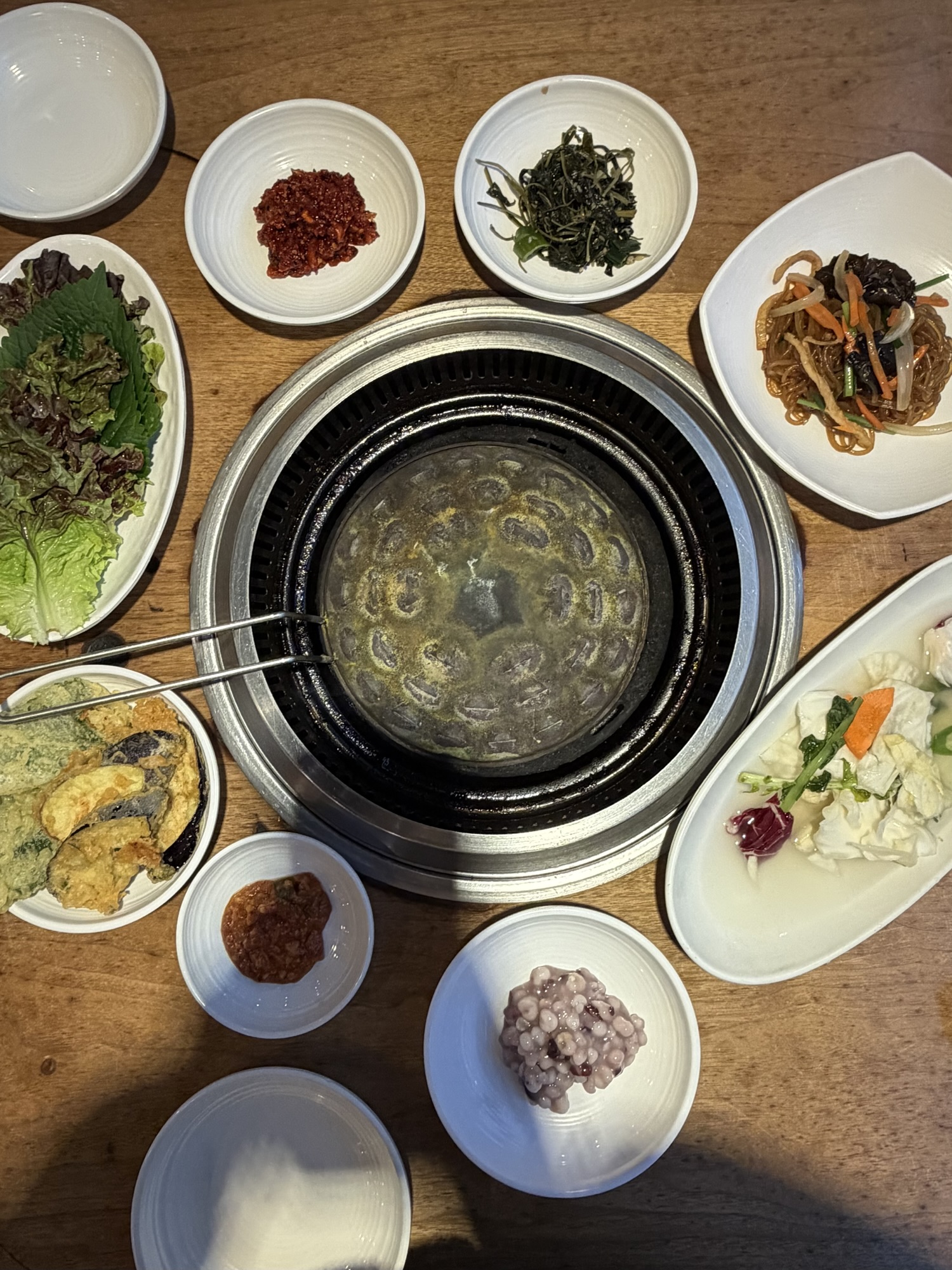
At most Korean charcoal BBQ restaurants, the banchan that comes with your order is utilitarian: raw garlic cloves, sliced green chili peppers, half a raw onion, maybe a little doenjang paste. Functional stuff you wrap with the meat or dip into. Songdo Galbi’s banchan spread is different.
They bring japchae (glass noodles stir-fried with vegetables), vegetable tempura-style fritters, several kinds of seasoned namul greens, and mumallaengi (무말랭이) — dried Korean radish strips marinated in a spicy, slightly sweet sauce. It reads more like a Korean home-style lunch set than a BBQ table. Everything that arrived was good, and you can get refills on any of it for free. The mumallaengi in particular: remember that one, because it comes back later when we talk about the ssam.
The galbi itself — ₩28,000 per serving
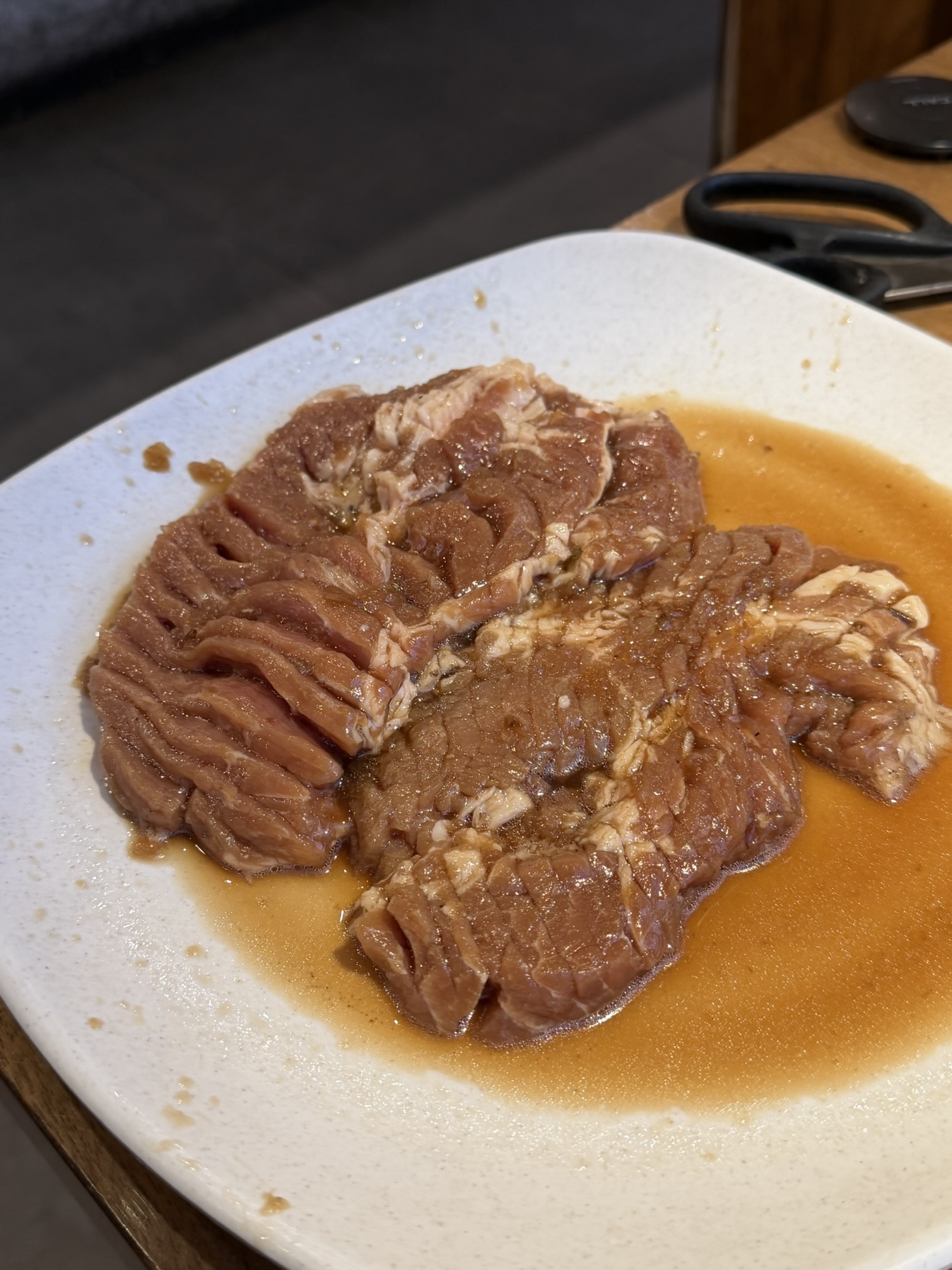
We ordered two servings of the han-don pork galbi. Each serving runs ₩28,000 (~$21). What arrives is two big slabs of marinated pork, scored all over with knife cuts so the sauce soaks into the meat instead of just coating the surface. The marinade smelled great — soy-based and a little sweet, but the sweetness is dialed back. It doesn’t smell like candy; it smells like something you want to eat.
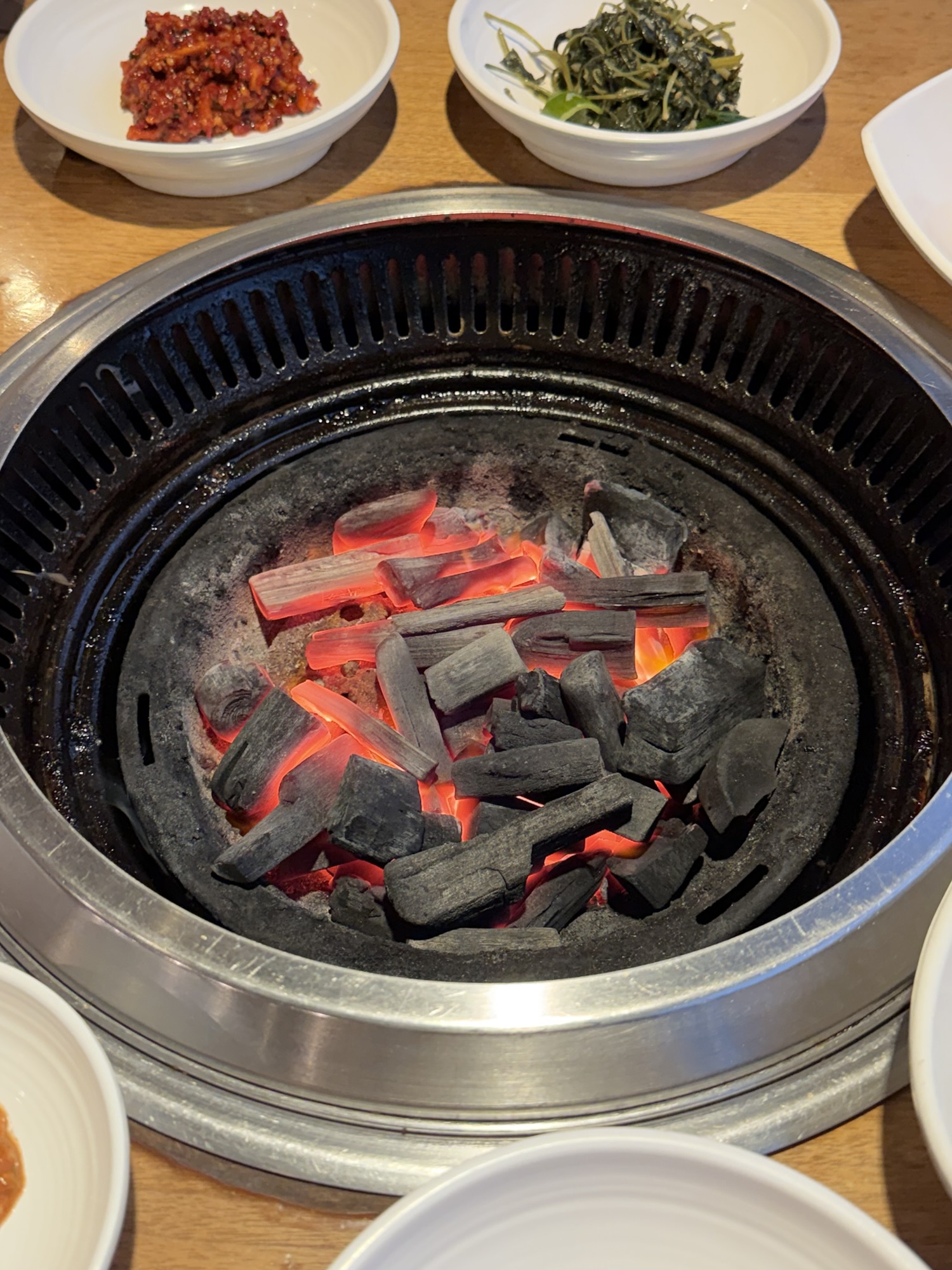
Then they load in the charcoal, and it’s visibly better than what you get at average places — thick-cut, glowing bright red, no filler. Good charcoal runs hotter and cleaner, and you can tell the difference in how the meat cooks.
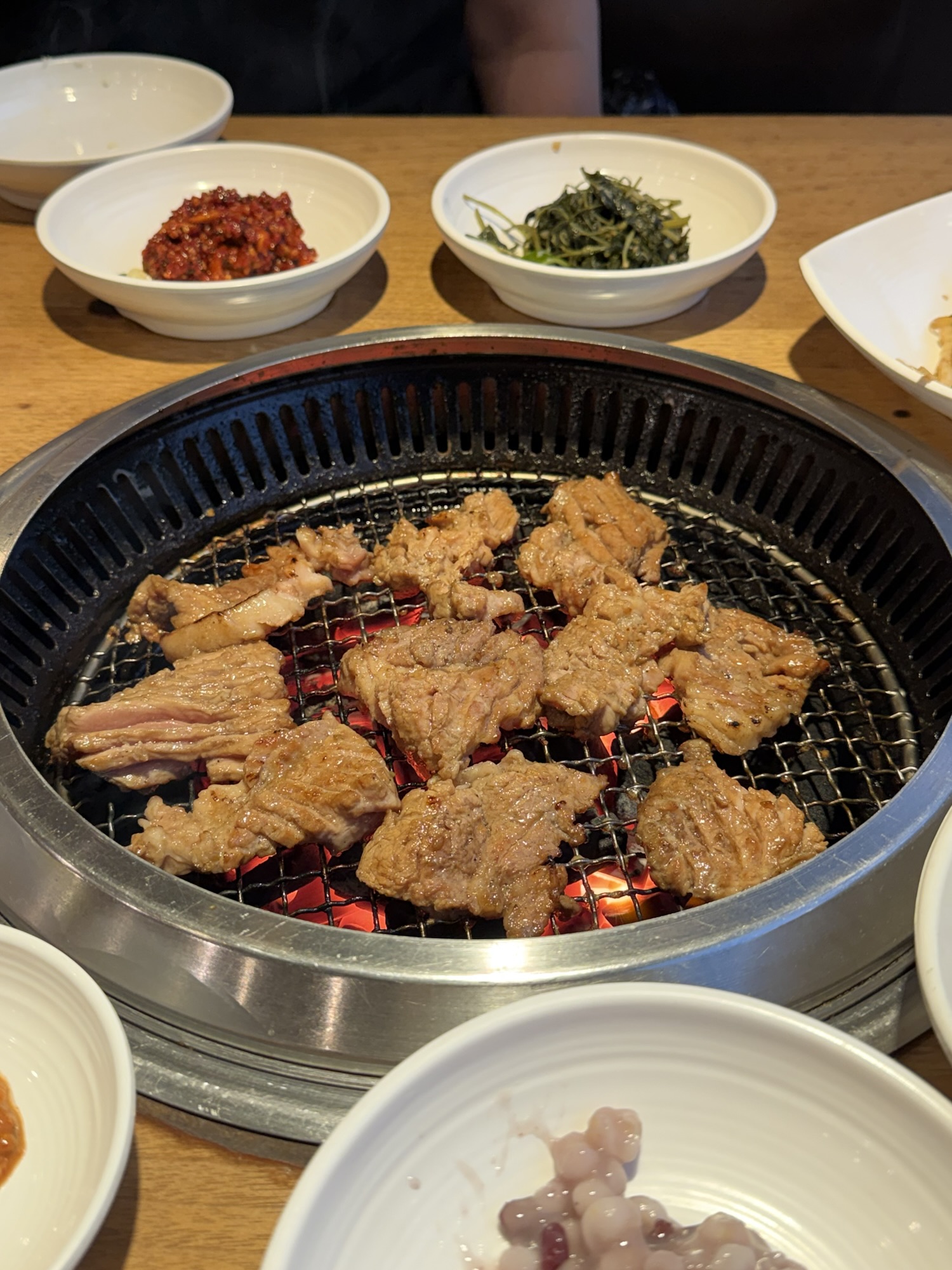
The staff takes over from here. They put the galbi on the grill, manage the cooking, and when it’s done they cut each piece into bite-sized pieces with scissors. You don’t touch it. You just eat the banchan and wait. It’s the kind of table service that makes the meal feel taken care of, not left to you to manage.
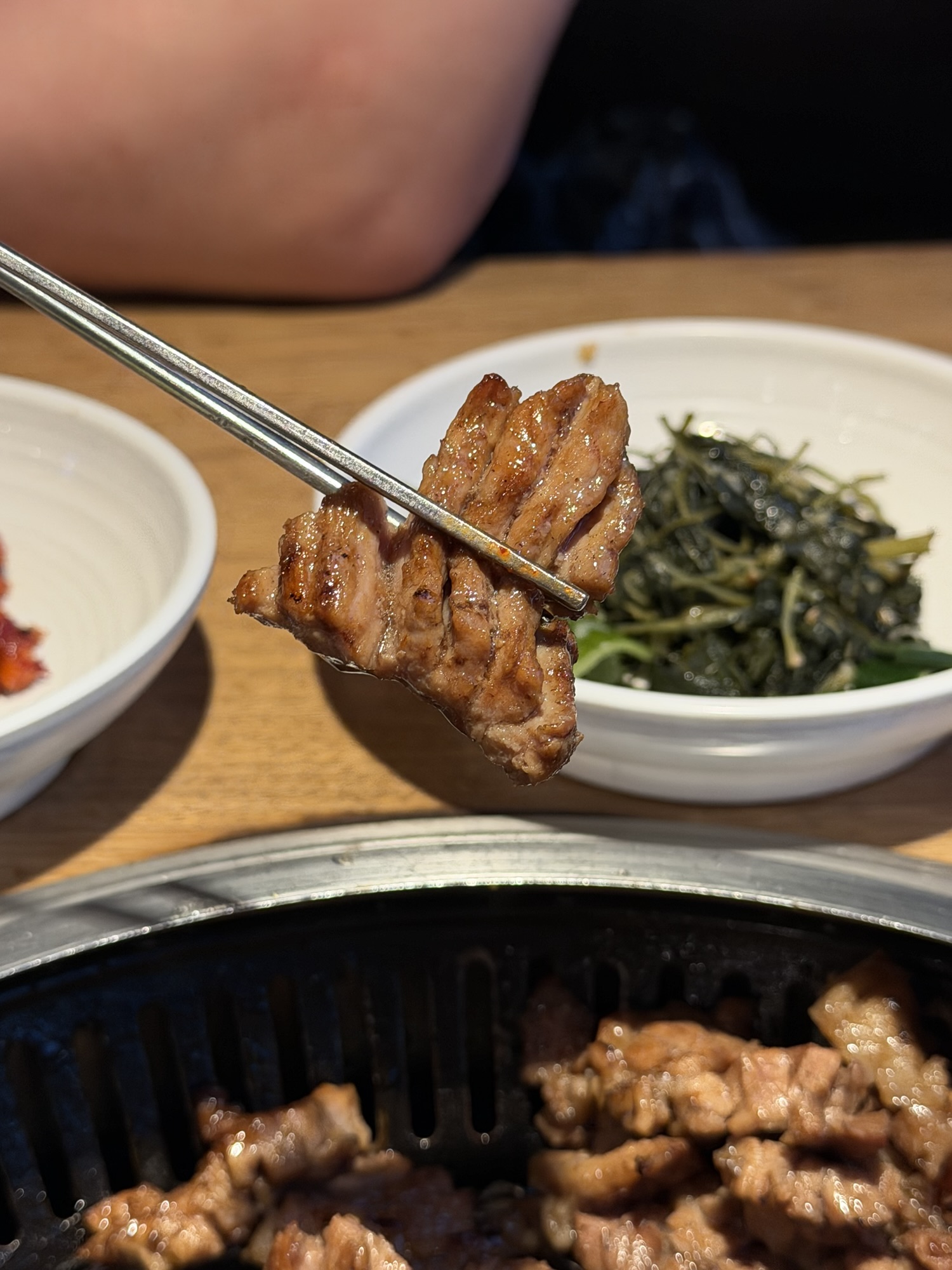
First bite: eat it plain. No ssam, no rice, no sauce. Just the meat. It’s tender — you can tell the scoring did its job — and the marinade has caramelized slightly at the edges. The sweetness is there but it’s not the main thing you taste. It’s good pork, treated well.
How to eat it (the ways I tried)
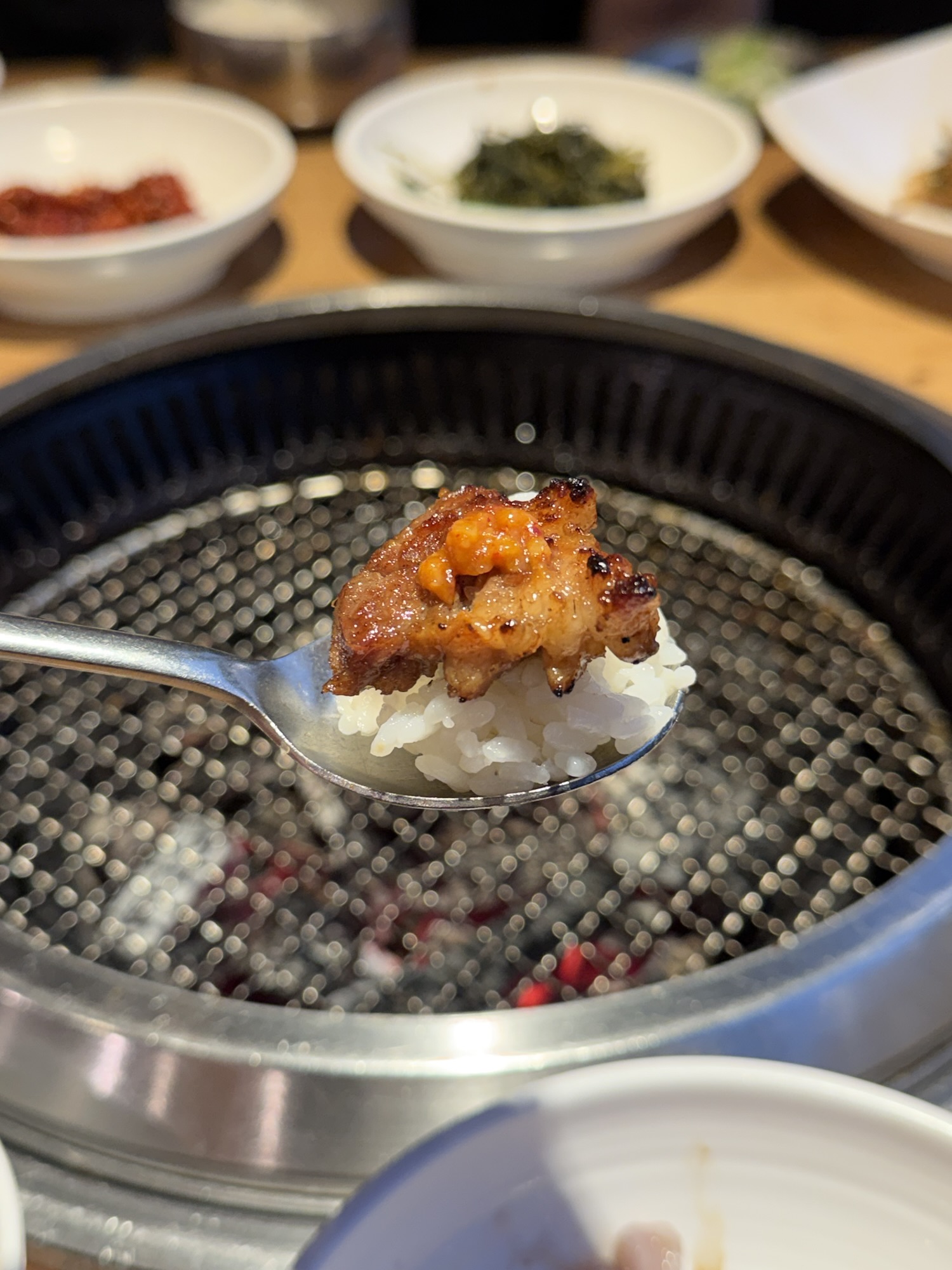
My favourite: a spoonful of white rice with a piece of galbi pressed on top and a dab of ssamjang (쌈장), the thick, savory soybean-and-chili paste. The rice soaks up whatever juice comes off the meat and the ssamjang cuts the sweetness. It’s not a clever combination — it’s just very good.
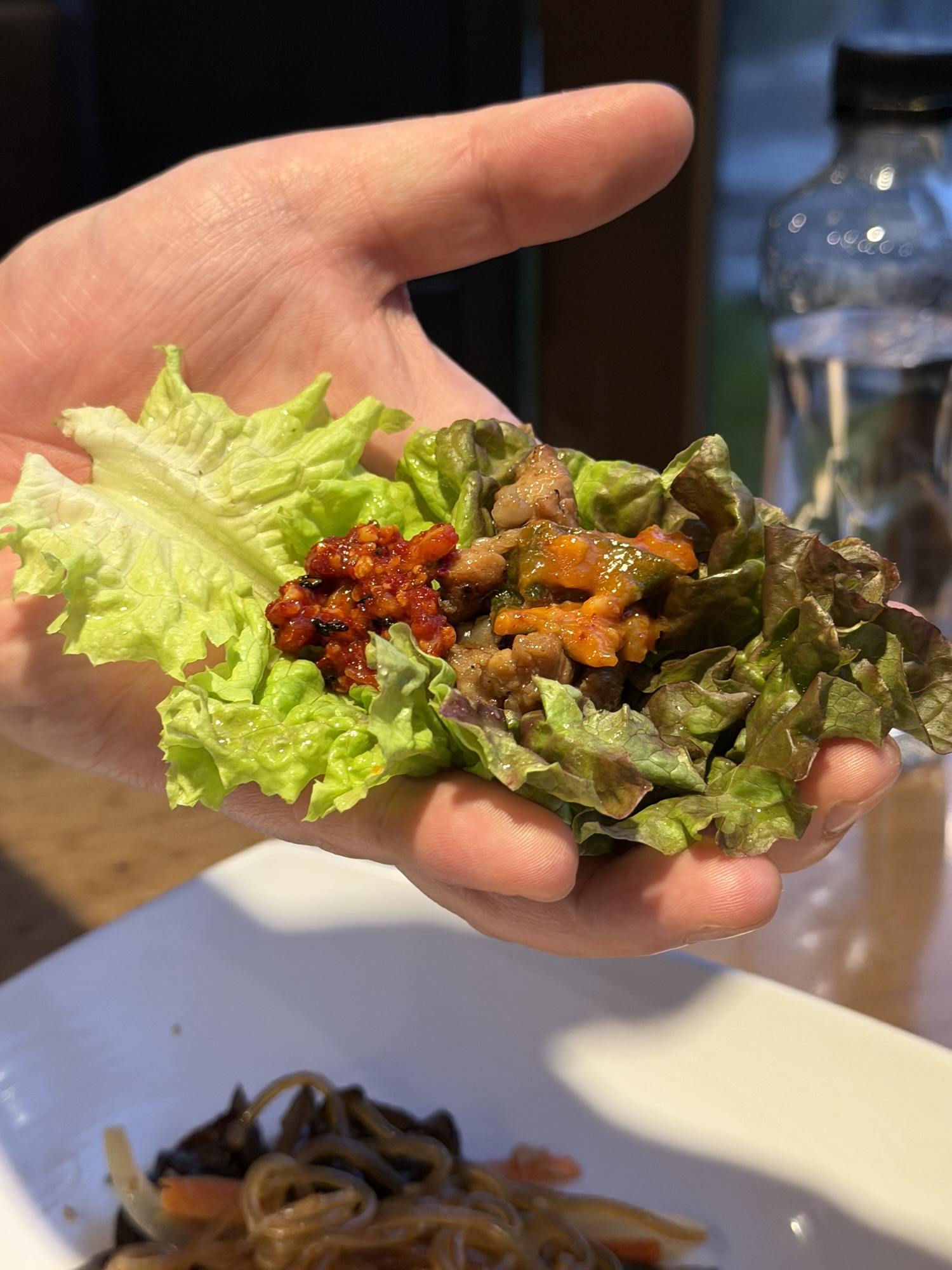
The ssam version: take a piece of leaf lettuce, load it with meat, add ssamjang, and drop in some of the mumallaengi from the banchan spread. That last part is important. The mumallaengi is spicy, and it goes with the galbi in a way that a raw garlic clove doesn’t. One bite hits the galbi’s sweetness, the ssam leaf’s freshness, and the mumallaengi’s kick all at once. I ate more of these than was probably necessary.
Doenjang jjigae and what it’s for
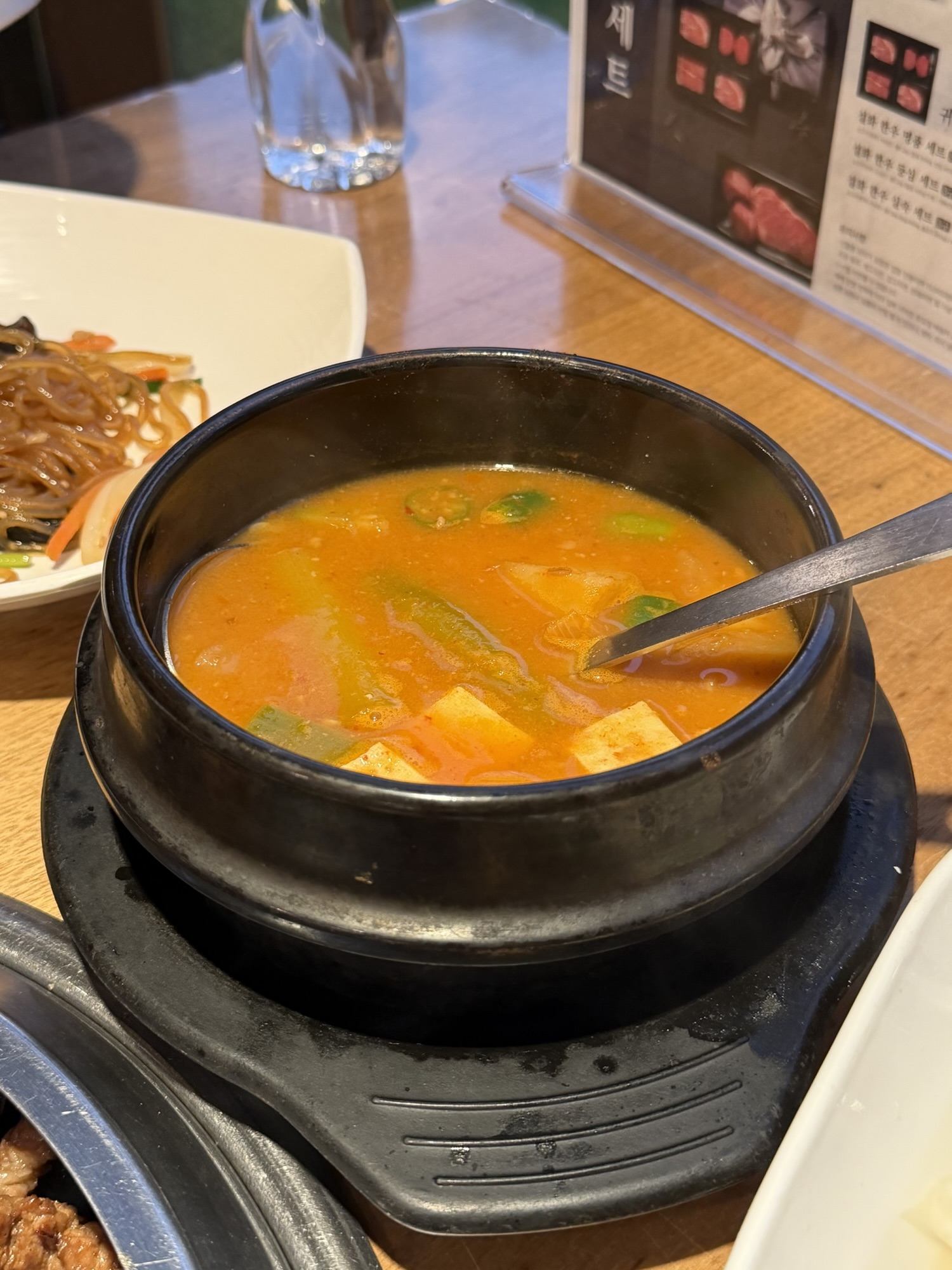
We ordered a doenjang jjigae (된장찌개) — fermented soybean paste stew — to go alongside the galbi. Doenjang jjigae is a staple Korean stew: thick, savory, slightly funky from the aged paste, usually with tofu, zucchini, green onion, and dried anchovy in the broth. The version here was darker and more intensely fermented than most restaurant versions, with a sharp, clean edge to the broth. It earns its spot at a Korean BBQ table: somewhere to park all the richness from the meat, a spoonful of broth between bites.
The naengmyeon — the thing I didn’t see coming
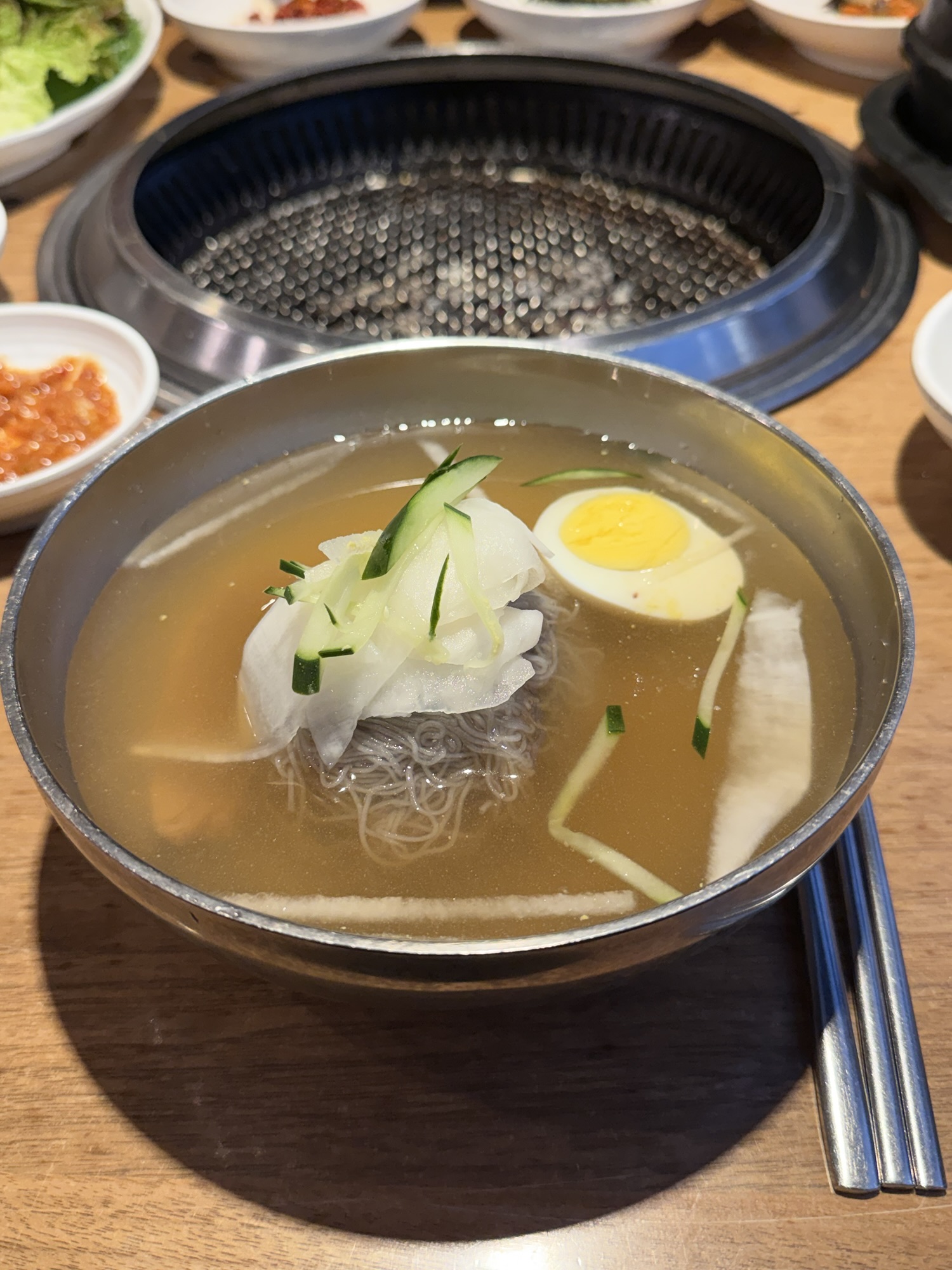
In Korea, finishing a galbi or samgyeopsal meal with cold noodles is standard practice. It’s not a separate course in the way dessert is in Western dining — it’s more of an unspoken rule. After the meat, you order naengmyeon. I went with the smaller dessert-sized mul-naengmyeon (물냉면, cold buckwheat noodles in clear chilled broth) because I was already pretty full. The portion was bigger than I expected.
I was not expecting much. I’ve had a lot of mul-naengmyeon at galbi restaurants and it’s usually serviceable — clean, cold, fine. The version here was the best I’ve had. The broth is clear but it has actual depth to it, a faint sweetness that I couldn’t quite place, with the cold temperature sharpening everything. The noodles had the right texture — slightly chewy, thin enough to slurp cleanly. I’d genuinely come back to this place just for the naengmyeon, and that’s not something I say.
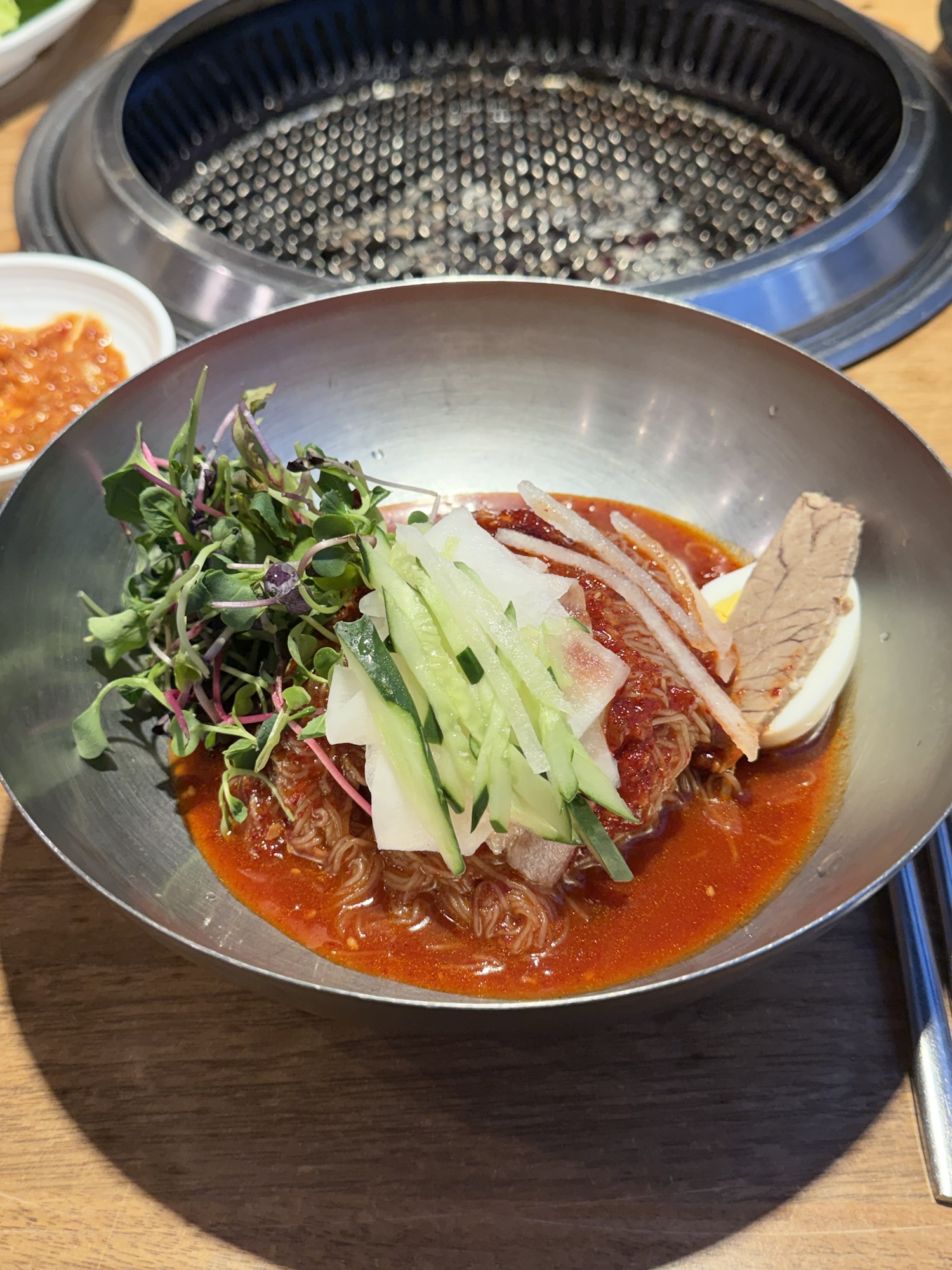
My companion ordered the larger meal-sized bibim-naengmyeon (비빔냉면) — buckwheat noodles tossed in spicy gochugaru sauce, topped with cucumber, radish, boiled beef, and microgreens. That portion was noticeably bigger, probably 1.5 times mine — spicy and bright, with a good balance to it. I tried some. Still liked the mul-naengmyeon more. But the bibim version was the better photo.
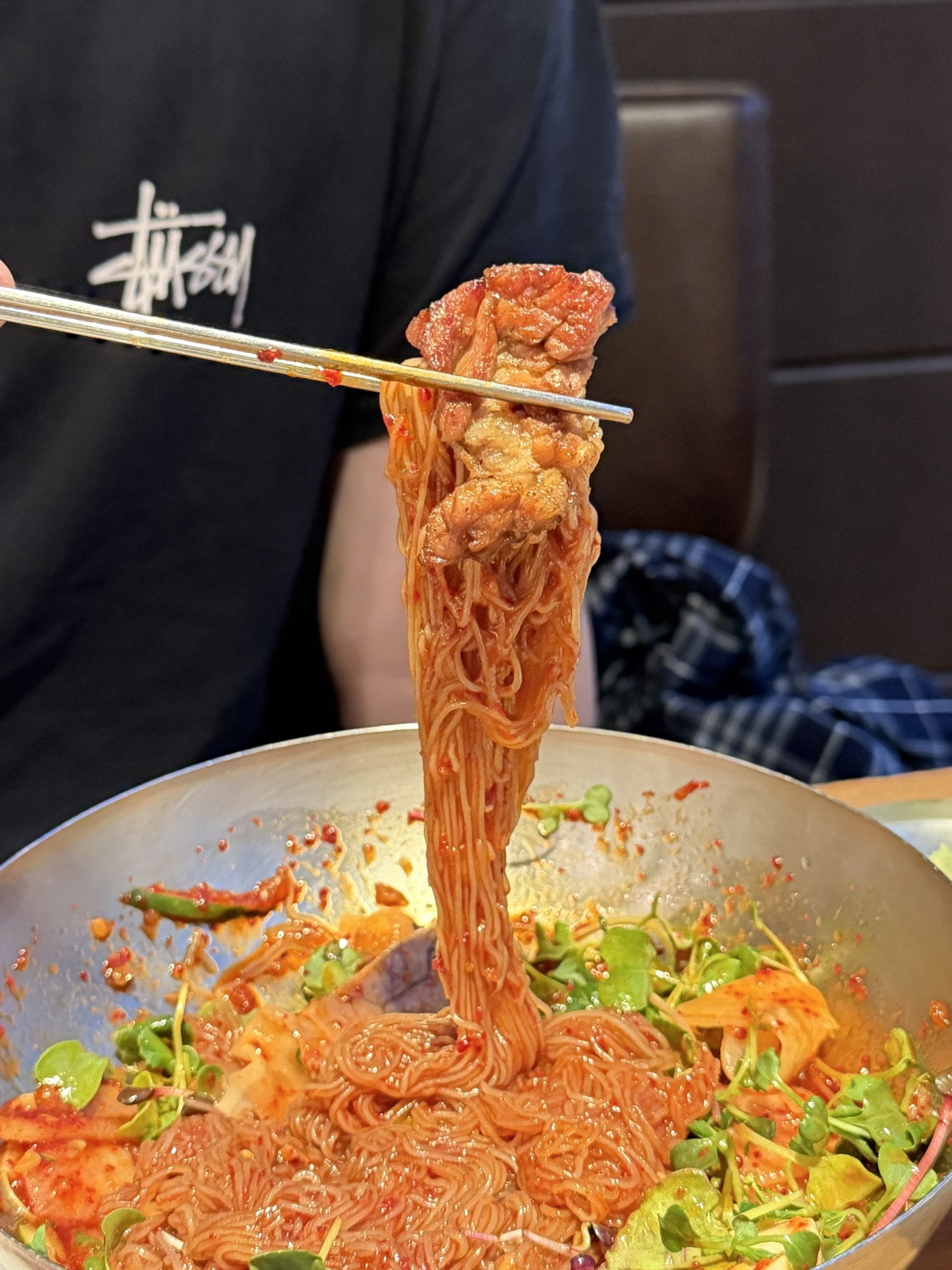
Leave a few pieces of galbi aside and eat them with the naengmyeon at the end. It’s not an accident that both dishes are on the table at the same time. The cold broth clears the smoky residue off your palate, and a bite of galbi gives the noodles something savory to play off. It finishes the meal more cleanly than just the naengmyeon alone.
The last thing they bring you
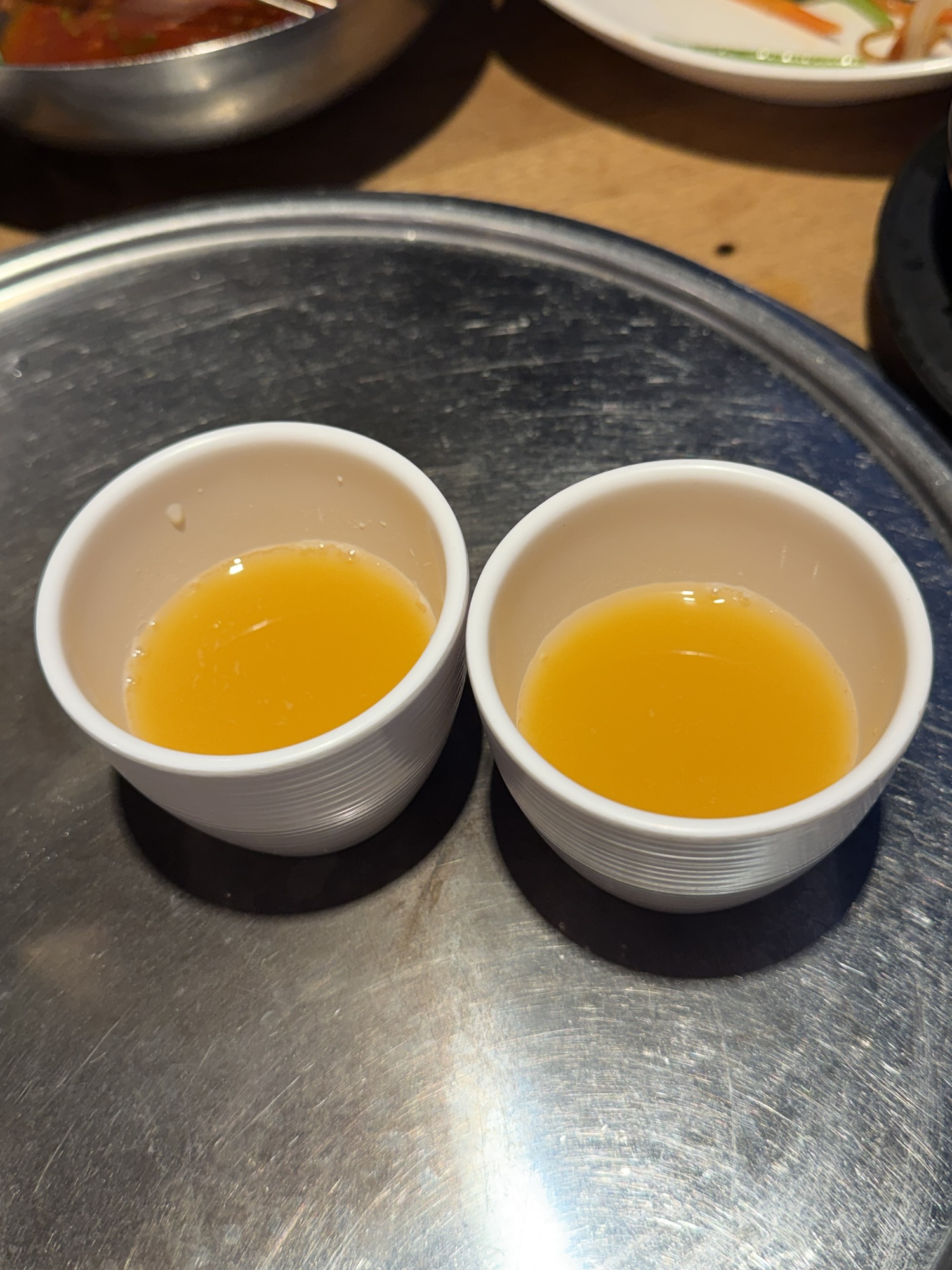
After everything — the galbi, the jjigae, the naengmyeon — a server brought out two small ceramic cups of danhobak sikhye (단호박 식혜). Sikhye is a traditional Korean sweet rice punch, and the danhobak (sweet pumpkin) version is golden-orange and lightly sweet, almost like a thinner, colder version of a sweet pumpkin soup. It’s served cold. It rinses the last of the grease off your tongue, clean and quick.
It’s a small thing, but it’s what separates a place that thinks about the whole meal from one that just feeds you and hands you the bill. From the waterfall entrance to the sikhye at the end, they’d clearly thought about every part of it. That’s the thing I’d tell someone before they go.
Where to find Songdo Galbi
Songdo Galbi (송도갈비) — 본점
인천 연수구 능허대로 16 (옥련동 194-46)
Hours: Daily 11:30–22:00
Phone: 032-831-0000
By car: Large dedicated parking lot, valet available. Car is the practical option — Yeonsu Station (Suin-Bundang Line) is about 20 minutes on foot.
From ICN airport: approximately 30-40 minutes by car.
Open Songdo Galbi in Google Maps →
Last verified: May 25, 2026. Prices subject to change. ₩28,000/serving at time of visit. USD conversion approximate (~$21 at ₩1,350/dollar).
Leave a Reply