Yongin is not usually the first place travelers add to a Seoul itinerary. It’s just outside Seoul, and unless you’re visiting Everland, a resort, or driving through the area, you may never end up there.
But there is one restaurant in Yongin that Koreans will actually travel for: Gogiri Makguksu (고기리막국수). It’s one of the most famous places for perilla oil makguksu, and if you’ve ever seen the Korean trend of cold buckwheat noodles coated in perilla oil, roasted seaweed, and sesame, this is the place that made that style famous.
I went on a Sunday evening, which was not exactly the easiest timing. Still, I wanted to write about it because this is exactly the kind of restaurant foreign visitors probably wouldn’t find by accident, even though it’s a huge name among Korean diners.
Why Koreans Drive to Yongin for It
Makguksu is a Korean buckwheat noodle dish, usually served cold. The classic versions are water makguksu with chilled broth, or bibim makguksu mixed with a spicy sauce.
Perilla oil makguksu is different. Instead of leading with spice or cold broth, it’s all about nuttiness. The noodles are coated with fragrant perilla oil, then covered with roasted seaweed and sesame. It sounds almost too simple, but that is the point. The flavor is deep, savory, and clean rather than loud.
Gogiri Makguksu is known as the original place for this style. The menu board inside even notes that its perilla oil makguksu started here in 2012, which explains why people keep making the trip out to Yongin for one bowl of noodles.
People Really Wait for This
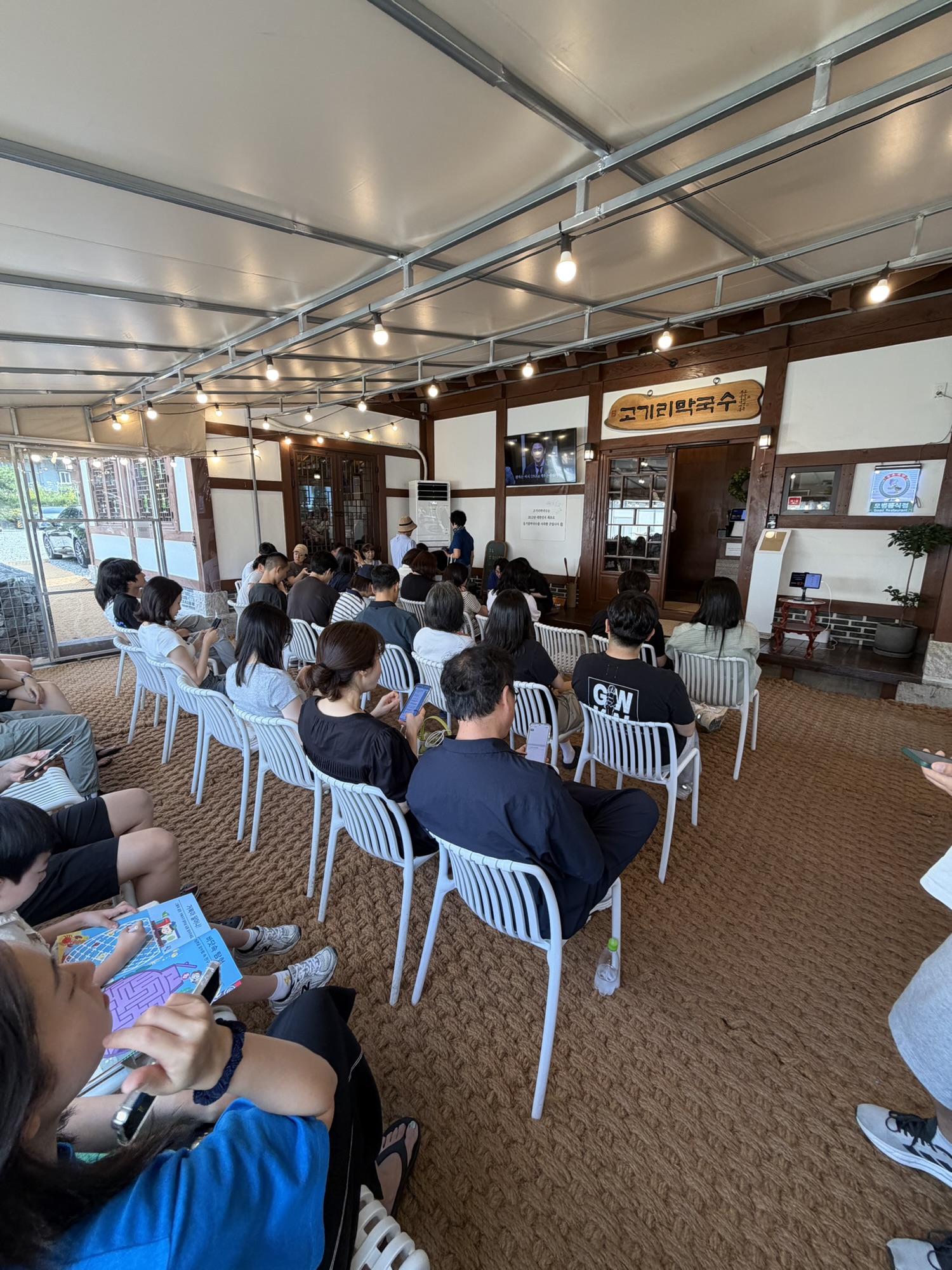
Gogiri Makguksu is very famous in Korea, so the waiting is part of the experience.
When I arrived, the waiting area was full of people sitting around with phones in hand, just waiting for their number to be called. It didn’t feel chaotic, though. The waiting space was covered, there were seats, and the whole system looked organized.
That helped.
This is not a restaurant you casually walk into on a weekend and expect to sit down right away.
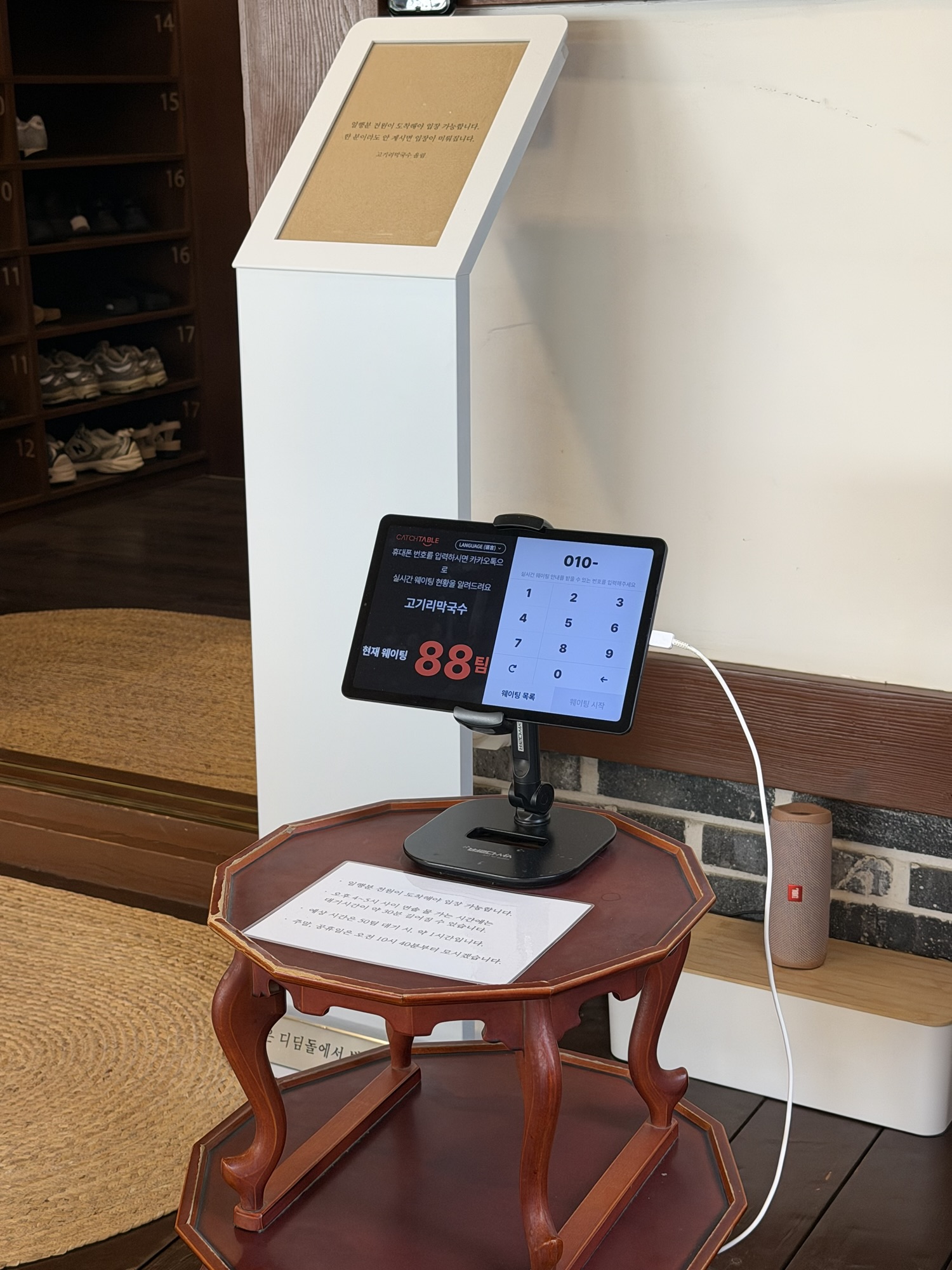
I visited around 5pm on a Sunday, and the kiosk showed 88 teams waiting. Eighty-eight teams, at 5pm, for noodles.
I had already put myself on the waitlist before going, so I didn’t have to stand there for the full wait. If you’re planning to go on a weekend, check the waiting system ahead of time, especially if you’re coming by car from Seoul.
This is one of those places where the food is simple, but the logistics are not.
Clean Space, Very Kind Service
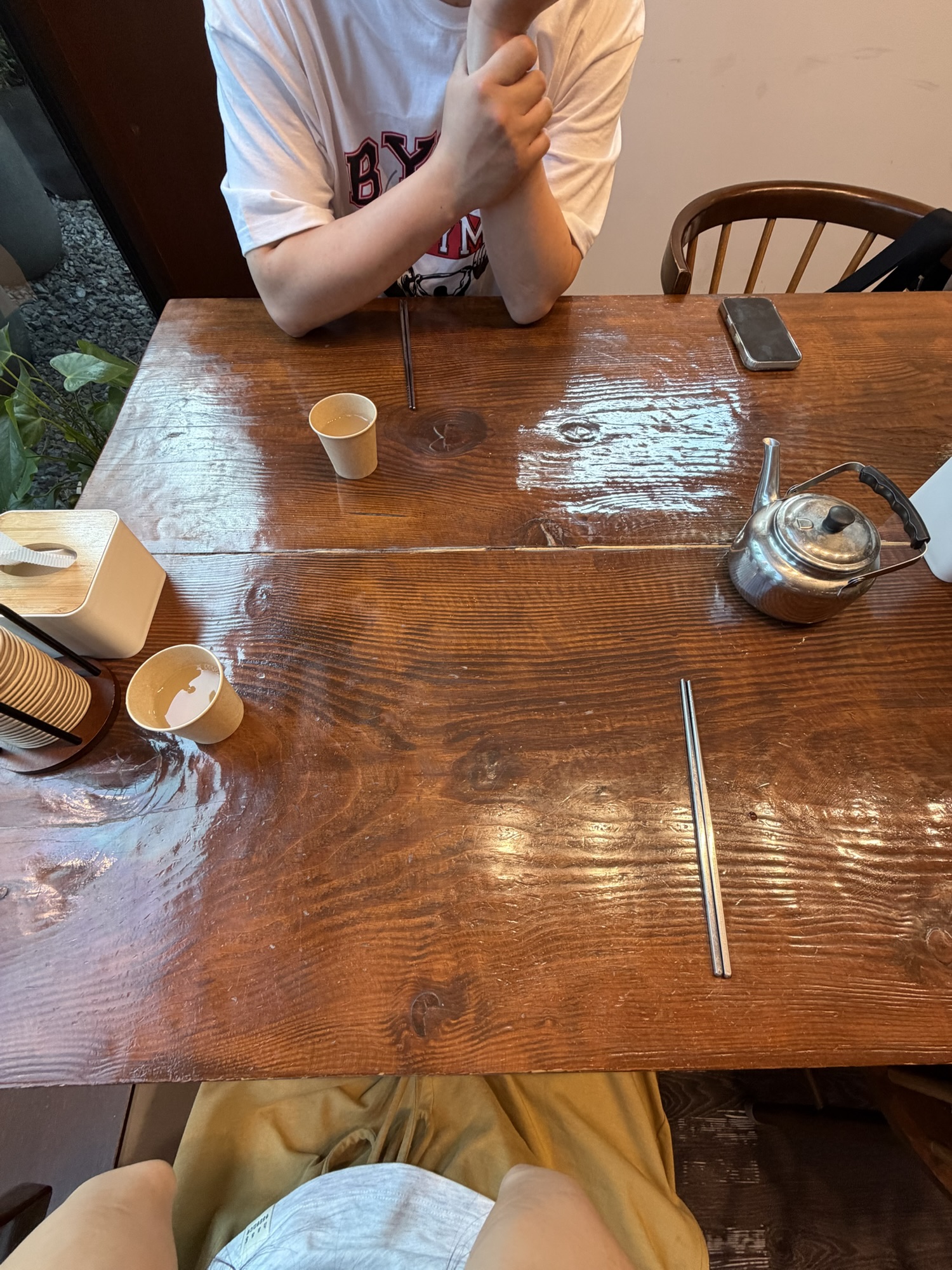
I couldn’t really take photos of the dining room because it was full, but the inside felt clean and well managed. The tables were simple, the space was tidy, and even with the crowd, it didn’t feel messy.
The service was the part that surprised me most. This is a noodle restaurant with a huge wait, so I expected everything to be fast and a little blunt. Instead, the staff were extremely kind. Not just normal polite, but genuinely attentive.
Small detail, but it stayed with me.
It made the meal feel more cared for than I expected from such a busy makguksu place.
What We Ordered
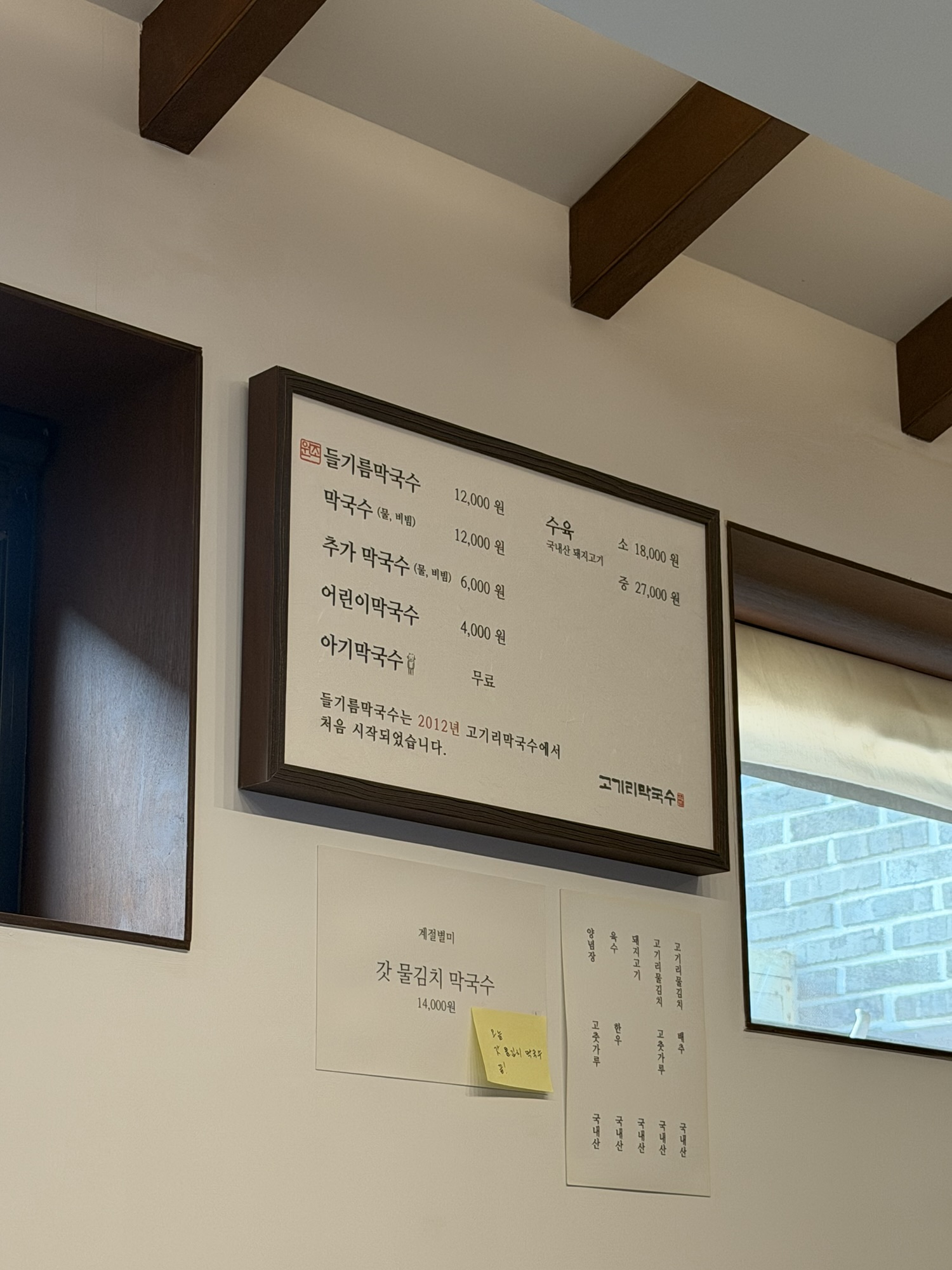
The menu is short, which I like here. As of July 2026, perilla oil makguksu was 12,000 won, regular makguksu was 12,000 won, extra noodles were 6,000 won, and suyuk came in two sizes: small for 18,000 won and medium for 27,000 won.
There were also kids’ noodles and baby noodles, but for adults, the main decision is simple: perilla oil, water, bibim, and whether to add pork.
We ordered perilla oil makguksu, bibim makguksu, and suyuk. If it’s your first visit, I think that is the right order. You get the signature bowl, one spicy bowl for contrast, and pork on the side.
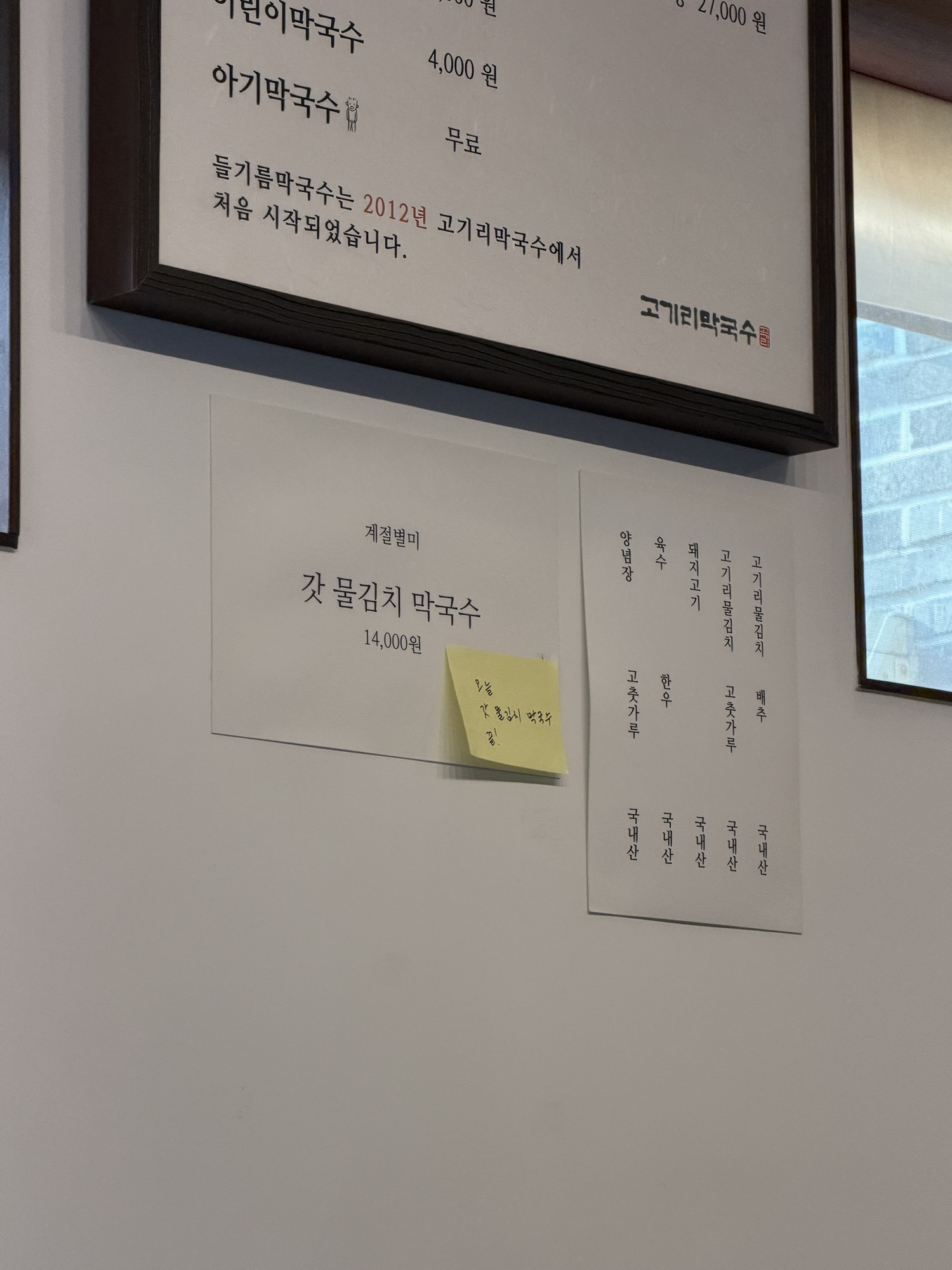
Another detail Korean diners notice: the ingredient origin board. Gogiri Makguksu lists domestic Korean ingredients, including the pork, beef, buckwheat, gochugaru, and napa cabbage.
Koreans tend to care about restaurants using Korean ingredients, especially at places that serve simple food. I do too. When a dish is this minimal, there is not much sauce or garnish to hide behind.
Hot Buckwheat Water First
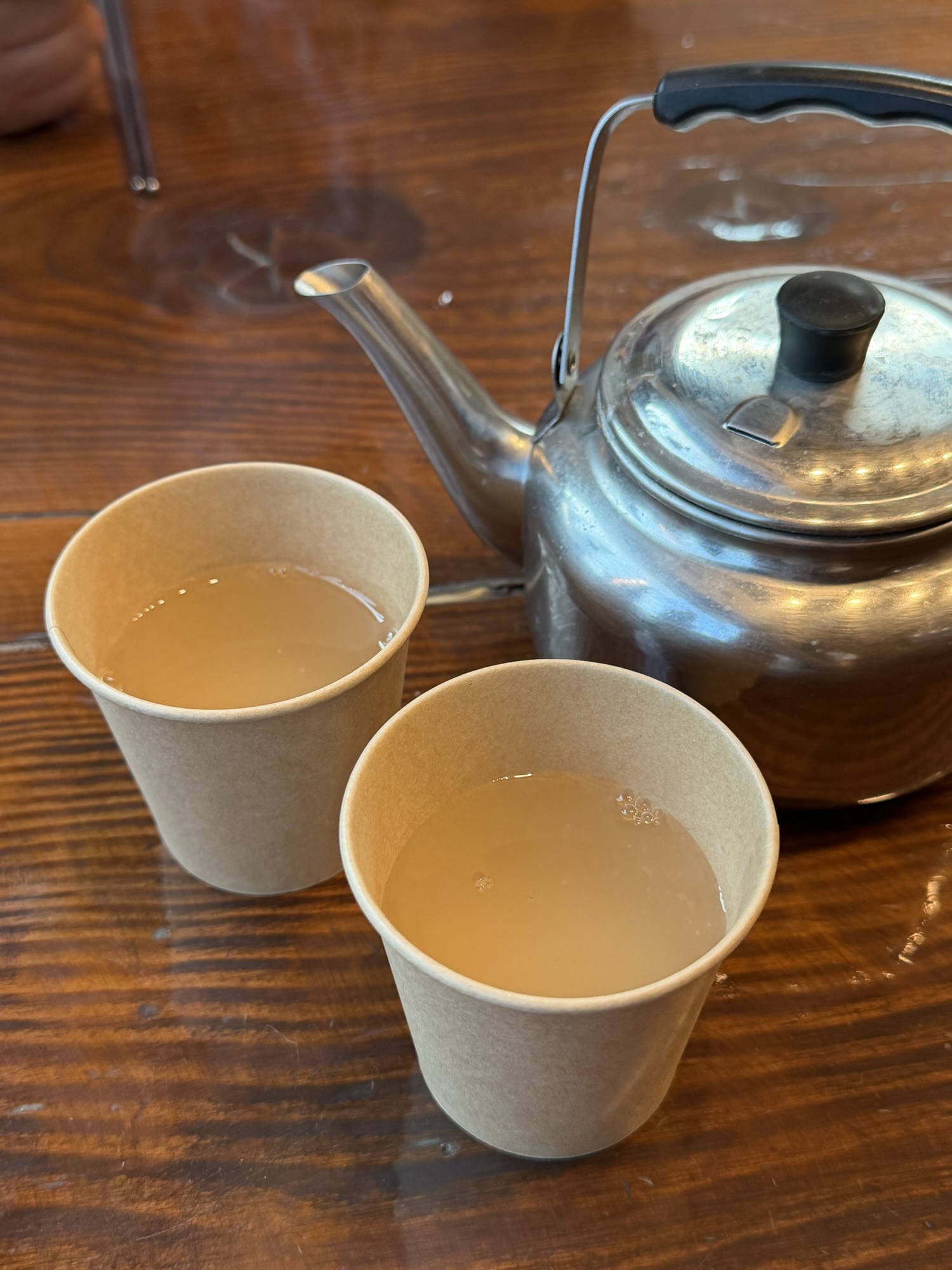
Before the food came out, they served hot buckwheat noodle water. It’s mild, warm, and slightly nutty from the buckwheat.
This is not something you drink because it’s exciting. It’s more like a quiet reset before cold noodles arrive. The flavor is gentle and plain in a good way, and it works nicely while you’re waiting for the food.
Simple, but nice.
After sitting through the weekend crowd, a warm cup of something calm felt very welcome.
The Water Kimchi That Changed My Mind
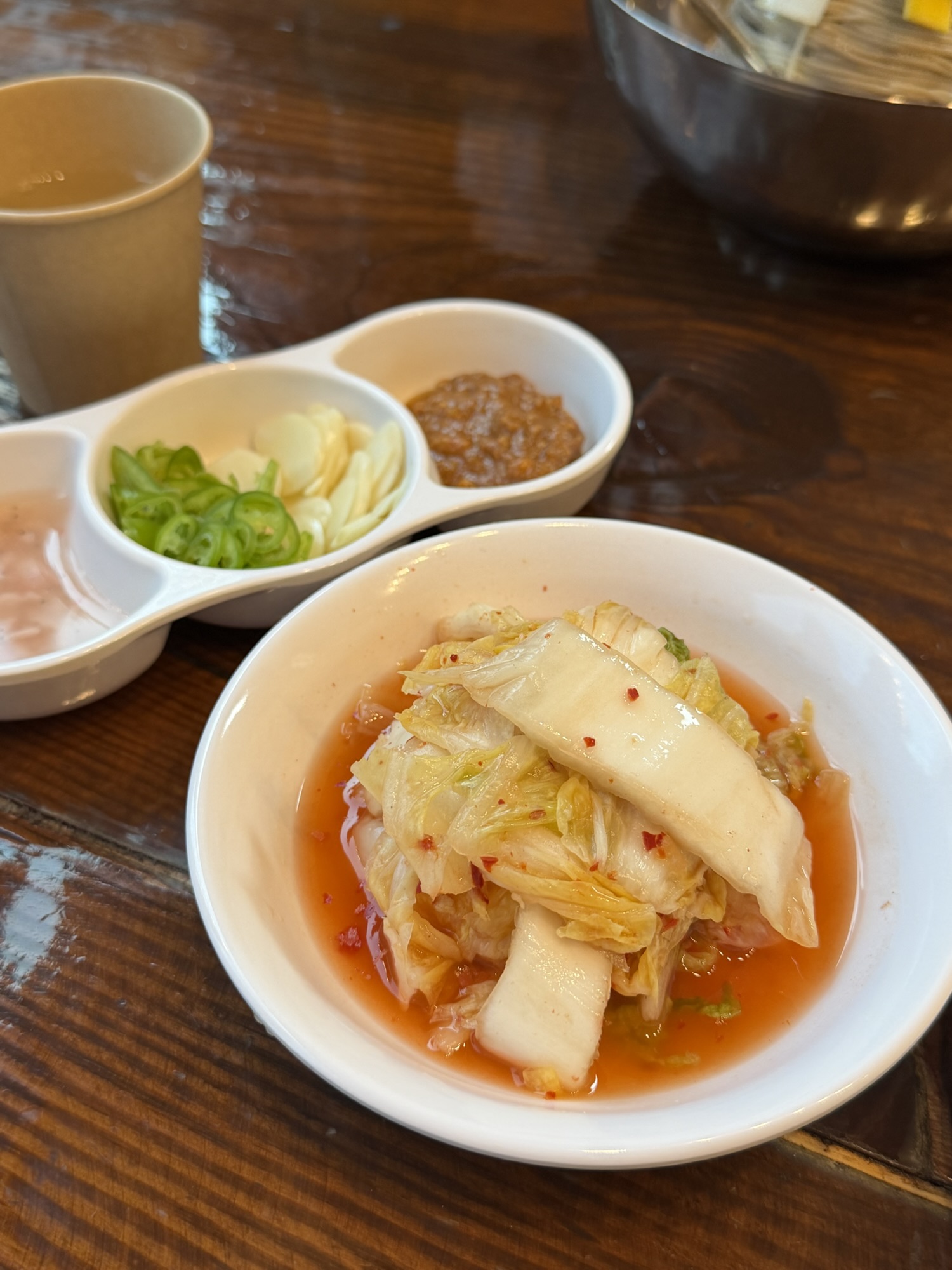
The main side dish was mul-kimchi, or water kimchi. Unlike regular red kimchi, water kimchi has a light, refreshing broth and usually tastes cleaner, cooler, and less aggressively fermented.
I don’t usually reach for water kimchi first, but this one was good enough that I kept going back to it. That does not happen often.
It had that refreshing, slightly tangy taste that works perfectly with buckwheat noodles. The perilla oil makguksu is nutty and savory, so the water kimchi cuts through it without fighting the flavor.
Don’t Skip the Suyuk
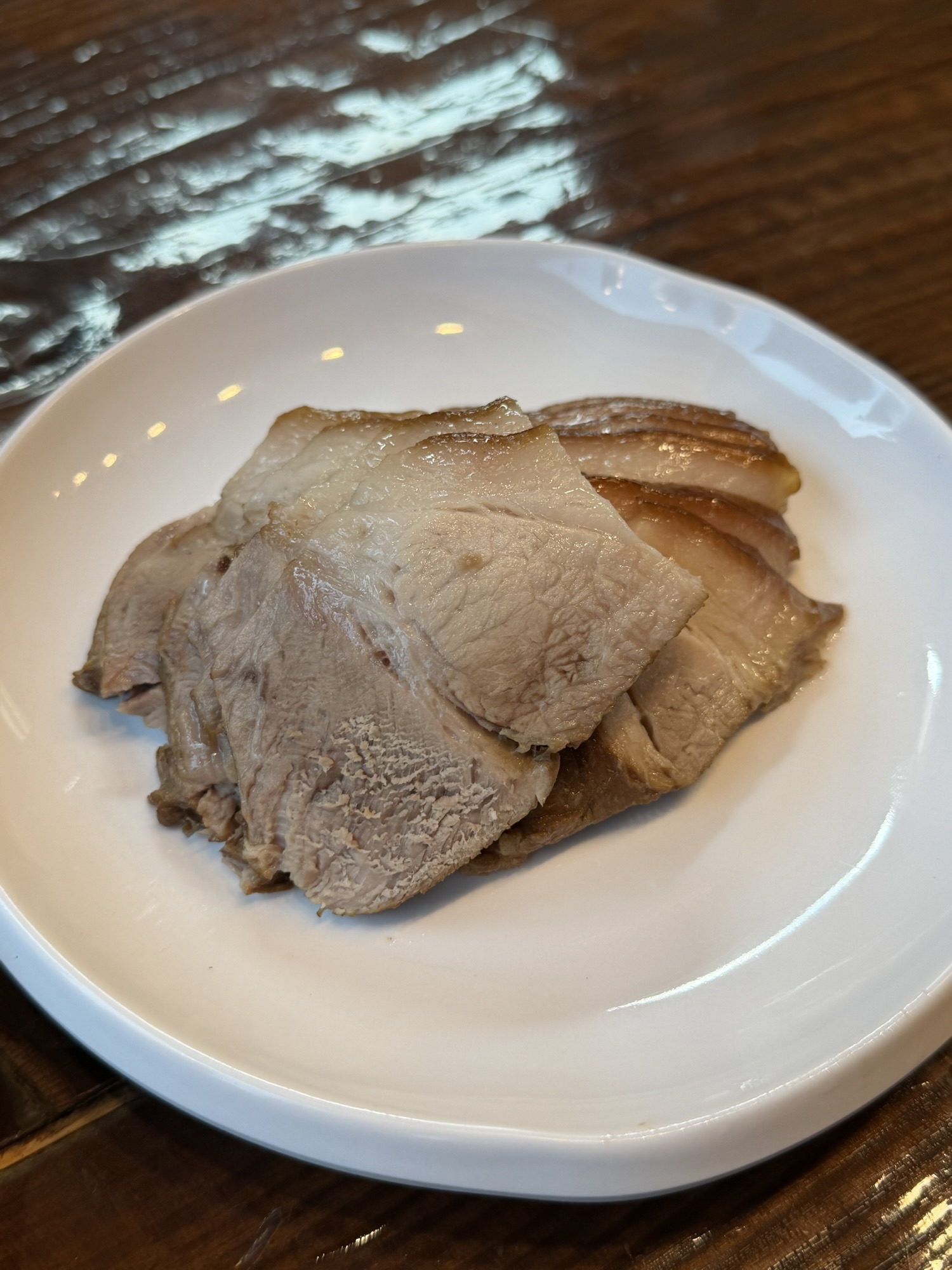
The suyuk came out first. Suyuk is boiled pork served in slices, usually eaten with kimchi, sauce, or salted shrimp depending on the restaurant.
The small size here still felt enough for two or three people as a side dish. It came with around ten fairly large slices, so it didn’t feel like a tiny add-on.
If you’re coming all the way here, I would order it. The noodles are the main event, but the pork makes the meal feel more complete.
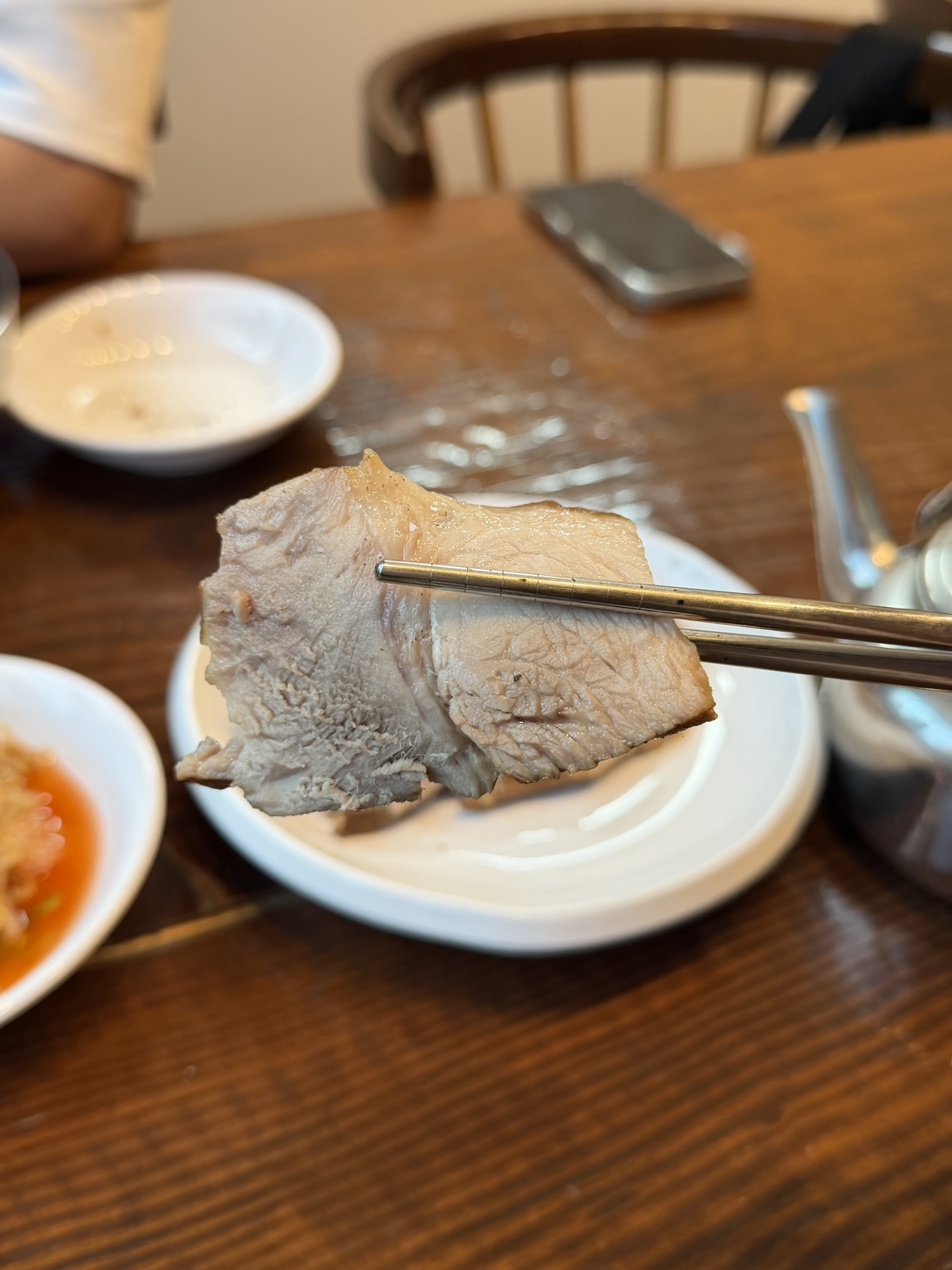
The pork had a good balance of lean meat and fat. It was soft, but not falling apart, and it had that slightly chewy texture that makes suyuk satisfying.
Two of us finished it very quickly. It was simple, well-cooked pork, and it made sense next to the noodles.
No leftovers here.
Bibim Makguksu for Contrast
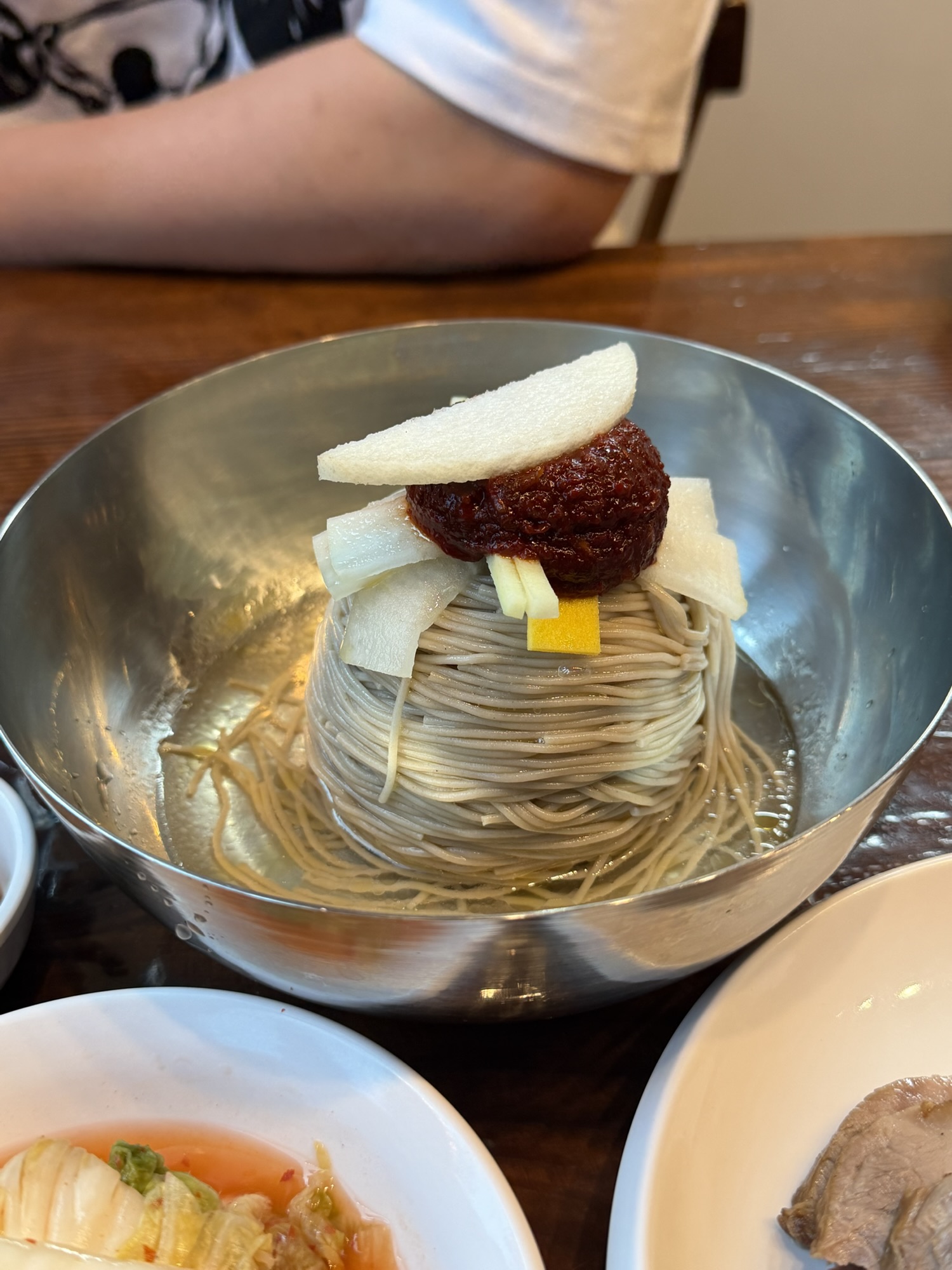
My friend ordered the bibim makguksu. I usually come here thinking only about the perilla oil version, so this was my first time actually paying attention to the spicy bowl.
Bibim makguksu is buckwheat noodles mixed with a spicy-sweet sauce. Here, it came with Korean pear, Korean radish, and a deep red sauce on top. Visually, it looked much more dramatic than the perilla oil bowl.
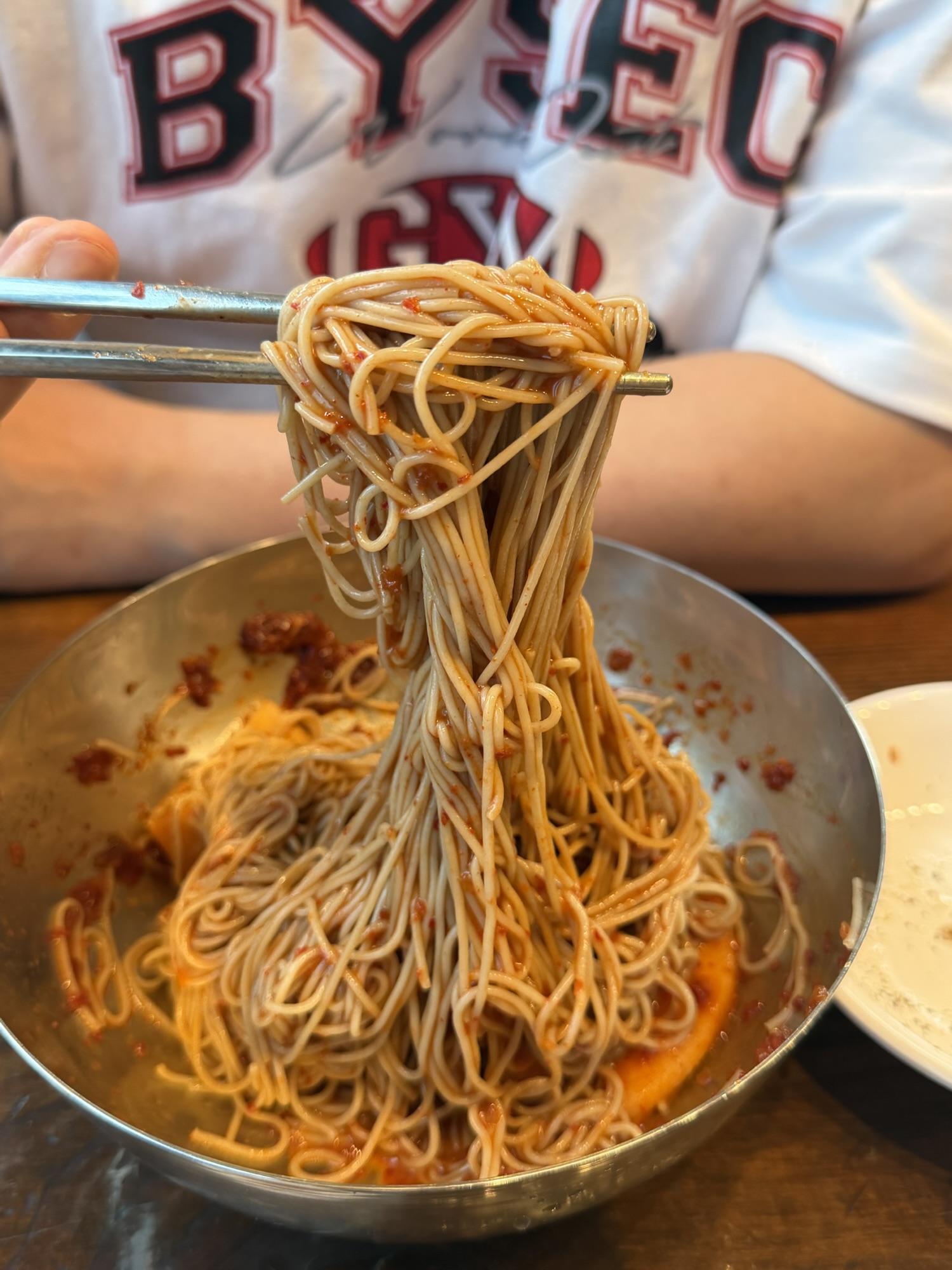
After mixing, the bibim makguksu was cleanly spicy and still had a nice nutty taste from the buckwheat noodles. It was good. I wouldn’t call it an afterthought.
But compared with the perilla oil makguksu, it didn’t leave the same impression on me. If I could only order one bowl here, I would still choose the perilla oil version without thinking twice.
The bibim version is a good second bowl to share, not the reason I would drive to Yongin.
The Bowl Everyone Comes For
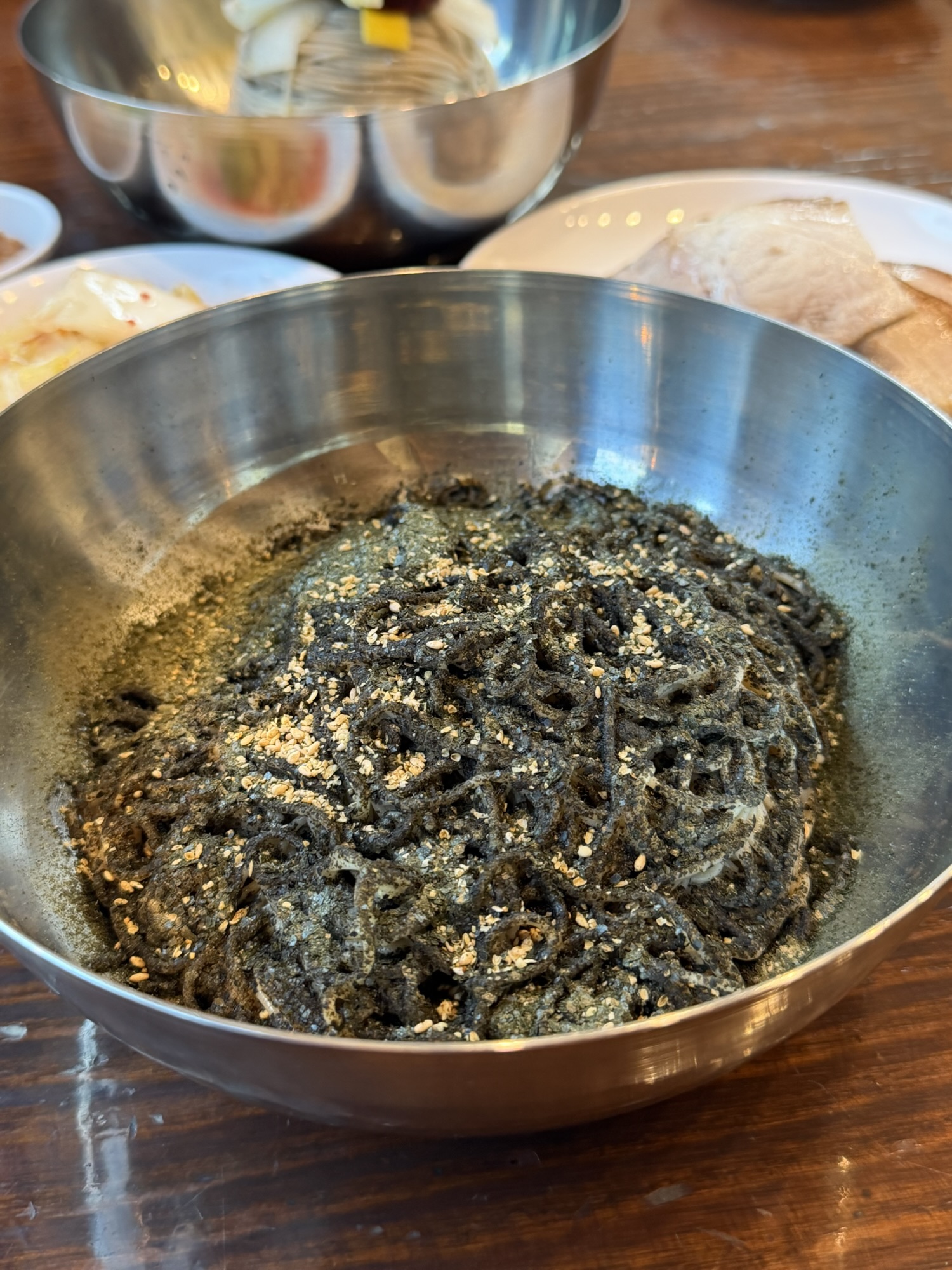
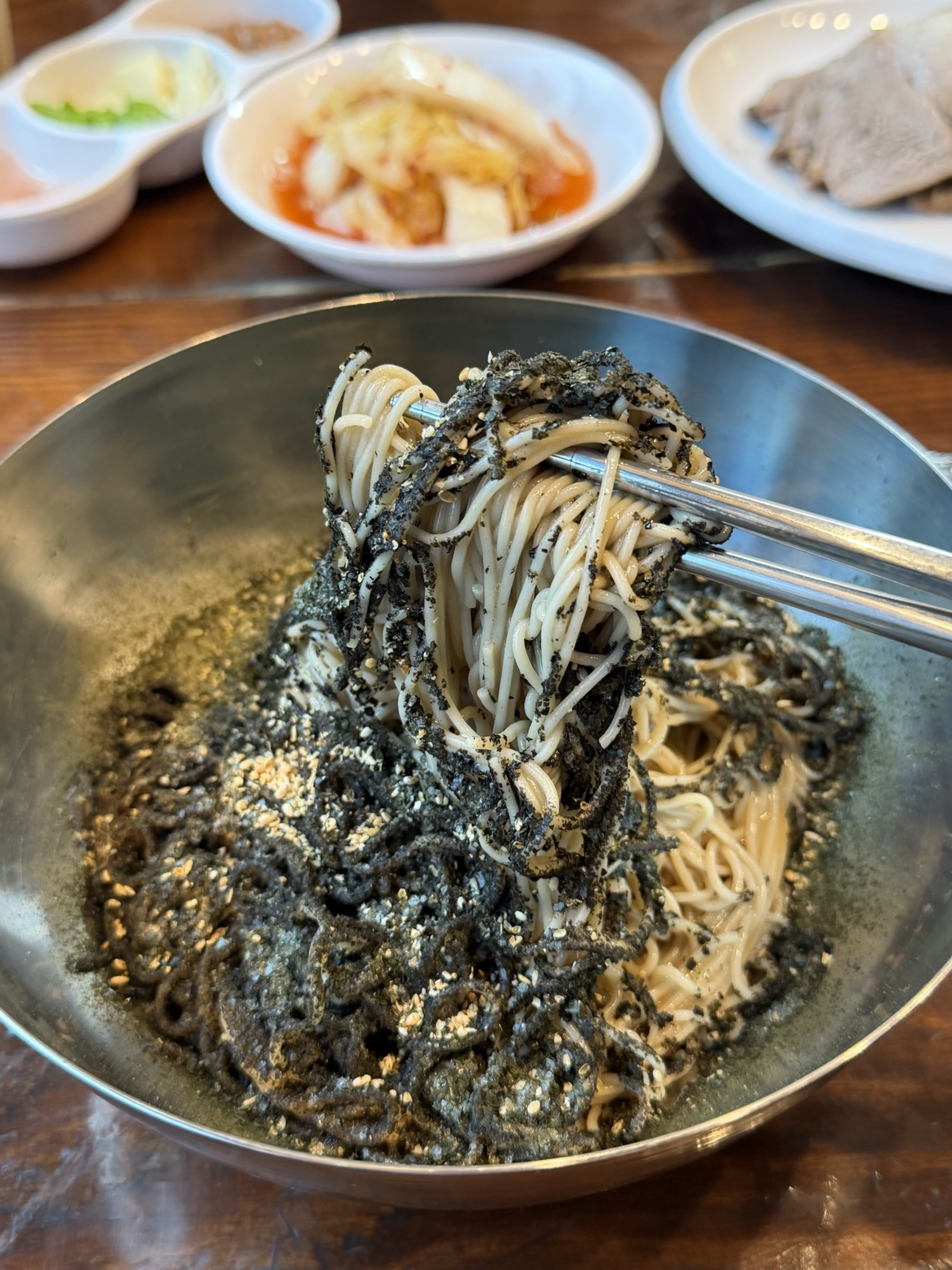
Then my perilla oil makguksu arrived, completely covered in roasted seaweed flakes and sesame. The look is almost funny because it’s so dark and simple, but the smell hits first.
It smells intensely nutty from the perilla oil, roasted seaweed, and sesame. Not heavy. Just deep and savory.
The restaurant’s recommended way is to eat it as served first, without mixing everything aggressively. That sounds strange if you’re used to tossing noodles with sauce, but it makes sense once you taste it.
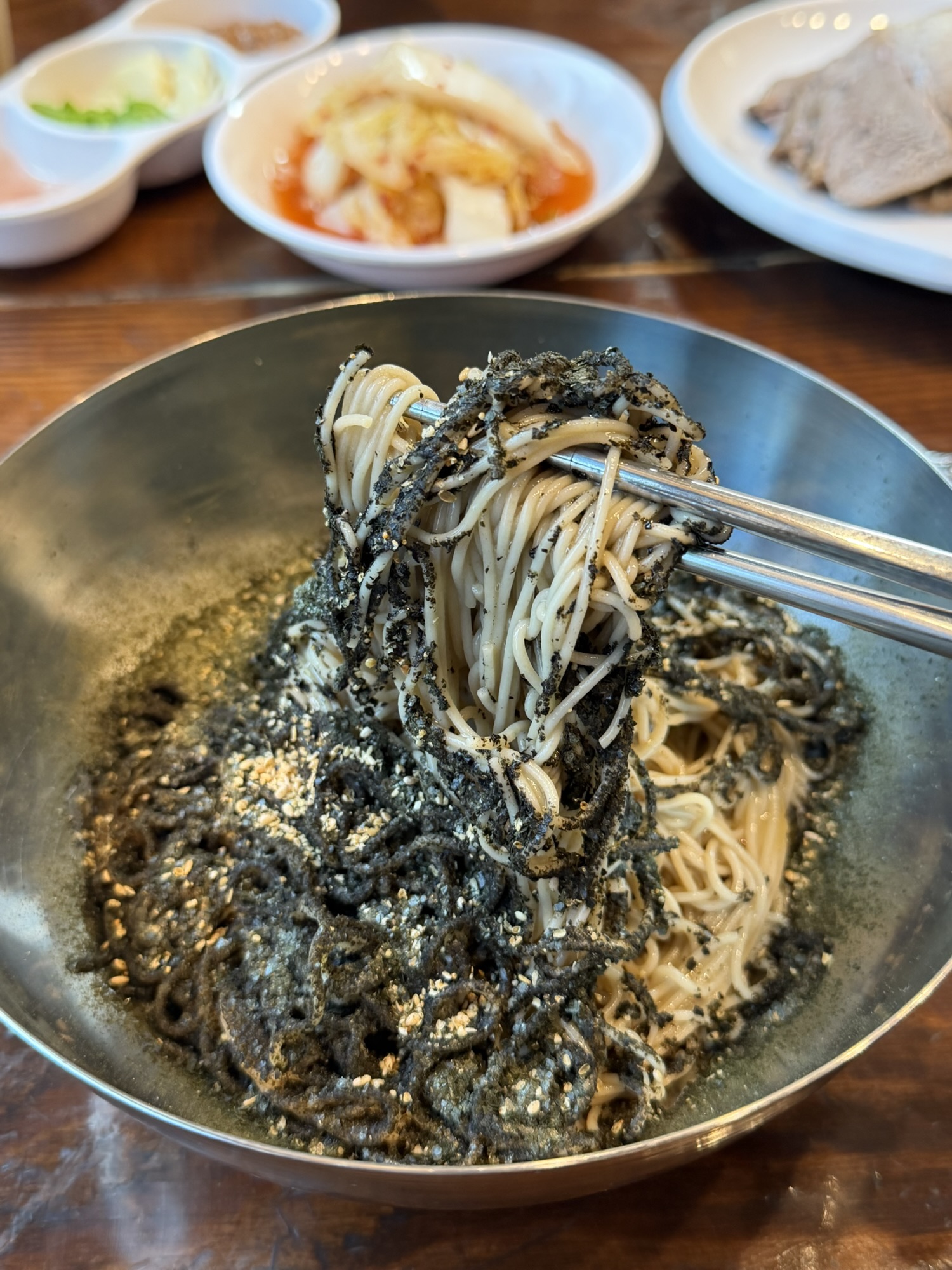
The first bite is exactly why people come here. The noodles are smooth and lightly chewy, the perilla oil coats them without feeling greasy, and the roasted seaweed adds this savory, ocean-y depth.
It could easily become too rich if the balance were off. But here, it doesn’t feel oily. The nuttiness is strong, but the bowl stays clean.
This is the bowl that makes the wait make sense.
No question.
How to Finish the Bowl
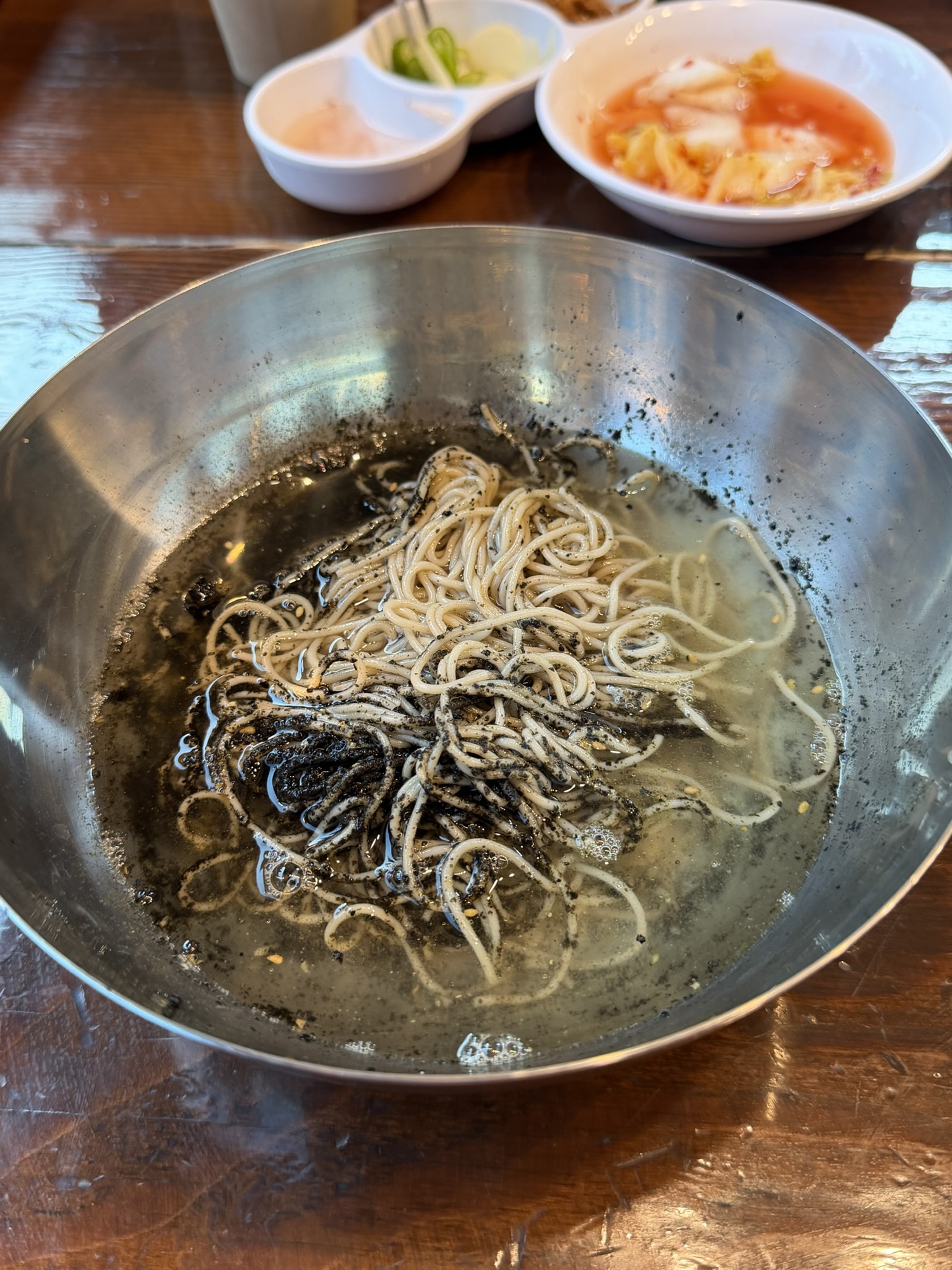
After you eat about half the noodles, you pour in the cold broth they give you. This changes the bowl completely.
The broth picks up the roasted seaweed, sesame, and perilla oil, so it becomes more savory and softer at the same time. It almost feels like a second dish, not just the leftovers of the first one.
This is my favorite part of eating Gogiri Makguksu. The first half is concentrated and nutty. The second half is cooler, smoother, and easier to keep eating even after you’re full.
Would I tell a first-time Seoul visitor to go all the way to Yongin just for this? Probably not, unless you’re very serious about Korean noodles or already have a car.
But if you’re passing through Yongin, visiting somewhere nearby, or traveling with someone who loves local Korean restaurants, Gogiri Makguksu is worth putting on the list. It’s simple food, but it’s simple food done with a lot of confidence.
Where to Find It
Gogiri Makguksu (고기리막국수)
Area: Gogiri, Yongin, Gyeonggi-do
Good for: perilla oil makguksu, Korean buckwheat noodles, suyuk, and a very local food stop outside Seoul.
Tip: Weekend waiting can be serious. I saw 88 teams waiting around 5pm on a Sunday, so check the waiting system before you go.
Open Gogiri Makguksu in Google Maps →
Visited on a Sunday evening. Menu prices are listed as of July 2026, and restaurant details can change.
Leave a Reply